

Publication & Publication Date: Law360 Canada (December 5, 2025)
Link to article: https://www.law360.ca/ca/articles/2418746/
The use of dashcamfootage in personal injury and accident benefits disputes is rapidlychanging the way Ontario adjudicators assess both liability and credibility.In a recent decision involving my client, the Licence Appeal Tribunalreaffirmed how critical this form of objective evidence can be, while alsoclarifying how tribunals evaluate delayed benefit applications under theStatutory Accident Benefits Schedule (SABS).
In Moffatt v. Aviva General Insurance, 2025 ONLAT 23-014149/AABS, thetribunal dismissed the insurer’s request for reconsideration afterpreviously deeming the incident an “accident” under s. 3(1) of the SABSand accepting the applicant’s explanation for his late OCF-1 submission.The case is significant because it reinforces two developing trends seen inrecent LAT jurisprudence:
1.The growing evidentiary weight placed on dashcam footage, and
2. A contextual, human-centred approach to assessing delay.
Background of the case
Jason Moffatt sought benefits pursuant to the SABS for an incident that occurred on Aug. 1, 2022,involving police and a police cruiser. His insurance company, Aviva General Insurance, denied theclaim on the basis that Moffatt was not involved in an “accident” as defined in s. 3(1) of the SABS.The SABS defines an accident as “an incident in which the use or operation of an automobile directlycauses an impairment.”
The issues in dispute were (1) whether Moffatt was involved in an accident as defined by the SABS,and (2) whether he is barred from proceeding to a hearing for failure to notify Aviva of the accident within seven days, or as soon as practicable, after the accident.
By way of background, in December 2021, Moffatt sustained a right fibula fracture after falling downsome stairs at home. He underwent open reduction internal fixation surgery to his right leg. He hadvisible scarring and was walking with a cane in August 2022 but had no ongoing concerns about hisleg.
On Aug. 1, 2022, Moffatt was forced into the backseat of a police cruiser after a domestic disturbancewith his landlady. Due to the barrier in the back of police cruisers, the foot and leg room in the backof the seat was reduced. Moffatt was unable to sit down in an upright position and bend his leg in a90-degree angle. When he finally had no choice and attempted to sit down fully, and to bend bothlegs in a seated position, he experienced unbearable pain in his right leg. He screamed out in agonyand had difficulties breathing from the pain.
It was ultimately determined that Moffatt sustained a re-fracture of the right leg. He requiredmultiple surgeries after this police incident. Unfortunately, due to serious complications, includinginfections, Moffatt’s leg ultimately had to be amputated below the knee.
At the LAT tribunal, we argued that Moffatt’s injury was in fact directly caused by the use or operationof the police cruiser, despite it not being an “accident” in the traditional meaning.
Although there were several relevant factors the LAT considered in coming to its conclusions, it reliedheavily on video footage from the police dashcam showing Moffatt’s entire experience in the policevehicle from the moment he entered the car until he was taken out by police at the police station.
The footage was critical in supporting Moffatt’s oral discovery and description of how his leg was re-injured in the police cruiser. It reaffirmed his credibility. The LAT ultimately found in favour of Moffattand deemed the incident of Aug. 1, 2022, an accident as defined under the SABS.
We further argued that Moffatt has a reasonable explanation for the delay in notifying Aviva of hisintentions to apply for accident benefits. In the aftermath of the accident, he was undergoingnumerous medical procedures, including surgeries, and ultimately a below-knee amputation. He wasphysically injured and psychologically traumatized, which made communication with counsel difficult.
Furthermore, we argued that an unsophisticated party may not realize they’re entitled to accidentbenefits in the circumstances, especially considering that Aviva denied an accident occurred in thefirst place.
The LAT found that Moffatt has a credible explanation for the delay, and is not barred from accessingaccident benefits due to delay in notice.
Dashcam footage as a decisive factor
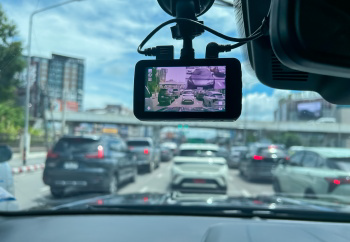
As discussed in my previous article for Law360 Canada, digital evidence such as dashcams andwearable devices is reshaping personal injury litigation. In this case, the dashcam video recorded atthe time of the incident played a crucial role in establishing how the injury occurred, supporting theapplicant’s position and ultimately grounding the tribunal’s finding that the event met the SABS definition of an accident.
This is increasingly common. When dashcam footage provides a clear and contemporaneous record,it often shortens disputes over mechanism of injury and reduces reliance on inconsistent witnessrecollections. The tribunal’s reliance on the footage in this case underscores its growing probativevalue, particularly where the incident involves unusual or contested fact patterns.
A compassionate and contextual approach to delay
A key issue in the reconsideration was whether the applicant reasonably explained his delay insubmitting the OCF-1. The applicant suffered severe complications following the incident, ultimatelyincluding a below-the-knee amputation. The insurer argued that the delay was unreasonable and thathiring counsel should have put the applicant on notice of his potential entitlement.
The tribunal rejected these arguments.
Key points from the ruling include:
Retaining counsel does not automatically cure uncertainty.
The tribunal recognized that even with legal representation, uncertainty over whether an eventmeets the SABS definition of an “accident” can reasonably affect the timing of an application.
Medical complications can impact communication and decision-making.
The tribunal accepted that the applicant’s extensive medical issues and ongoing instabilityaffected his ability to manage paperwork and communicate effectively with counsel, withoutrequiring a direct statement from the applicant that he was unable to do so.
Reconsideration is not a vehicle to reweigh evidence.
The tribunal concluded the insurer failed to identify any legal or factual error. Attempting torevisit credibility or reinterpret the adjudicators’ findings fell well below the high thresholdunder Rule 18.2(b).
What this decision means for claimants and counsel
This case offers several practical takeaways for personal injury lawyers and insurers navigatingaccident benefits disputes:
- Dashcam footage can be outcome-determinative. Parties should preserve, analyze and discloseit early.
- Delay explanations will continue to be assessed holistically, not rigidly.
- Severe injuries, cognitive impacts, hospitalizations and instability remain persuasive factors inexplaining procedural delays.
- Hiring counsel does not eliminate uncertainty around the definition of “accident,” especially inborderline or complex fact scenarios.
- Insurers face a high bar when seeking reconsideration, and arguments that simply challengefactual findings are unlikely to succeed.
Looking ahead
As digital evidence becomes increasingly common, we’re seeing LAT decisions reflect a more modernevidentiary landscape, one that values objectivity but still recognizes the human realities of recovery,trauma and disability.
This case strengthens the message that the tribunal is prepared to take a compassionate, evidence-based approach when dealing with vulnerable claimants, particularly where their injuries impactcommunication or administrative capacity.
It also demonstrates how dashcam footage continues to evolve from a helpful supplementary toolinto a central pillar of accident reconstruction and credibility assessment.