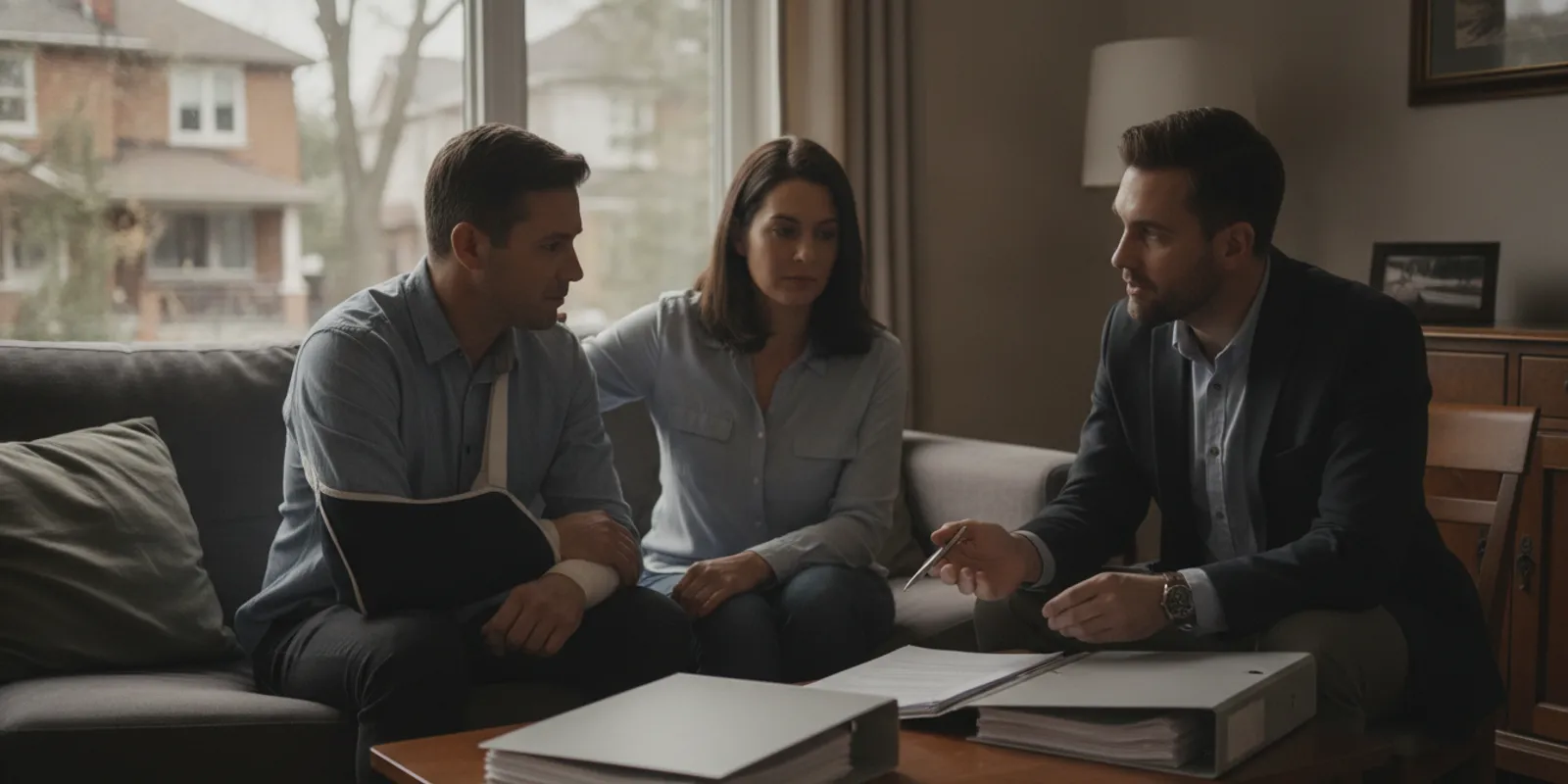

If you or someone in your family was hurt in an impaired-driving collision, it can be hard to know where to turn. An impaired driving injury claim Ontario residents may consider can involve more than one process: an injury claim against a responsible driver, accident benefits through an auto insurer, or both. The right route depends on what happened, the injuries, the available insurance and the evidence.
Request a free consultation about your injury
What legal claims may follow an impaired-driving collision in Ontario?
Impaired driving describes a serious circumstance surrounding a collision. It does not, by itself, answer every question about who is legally responsible or what compensation may be available. A civil injury claim generally examines whether another party was legally at fault, whether that conduct caused or contributed to the injury, and what losses can be established. The analysis relies on the evidence and the law that applies to the particular facts.
An injured person may also have access to statutory accident benefits under Ontario’s auto insurance system. These benefits are a separate route from a lawsuit against a driver. Depending on the circumstances, a person may need to notify an insurer, complete forms, attend assessments, or respond to a denial while a civil claim is also being considered. A claim does not guarantee payment, and eligibility and recoverable losses depend on the facts.
There may be related issues when the injured person was a passenger, was driving another vehicle, or died in the collision. Families may need advice about who can bring a claim and what losses may be considered. If you are not sure which route applies, Hoffman Law’s motor vehicle accident information is a starting point for understanding the firm’s work with injured people.
Does an impaired-driving charge prove civil liability?
A police investigation or criminal charge can be important, but it is not the same thing as resolving a civil injury claim. Criminal proceedings address alleged offences. A civil claim focuses on responsibility for the collision, the connection between the collision and the injuries, and the losses being claimed. Each process has its own purpose and procedures.
Evidence of impairment may be relevant to how a collision happened. Still, the parties may disagree about other facts, such as who had the right of way, vehicle speed, road conditions, what each person did, or whether another factor contributed. A criminal case may take a different course from a civil case, and a person should not assume that a charge, acquittal, or conviction alone settles every insurance or compensation question.
For that reason, preserve information from the collision and seek advice before making assumptions about the outcome. Do not contact another party to argue about fault or post detailed descriptions of the event on social media. If an insurer asks for information, understand what is being requested and consider getting legal guidance, particularly if you have serious injuries or the facts are disputed.
Who may be responsible for the injuries?
The driver alleged to have been impaired may be one potential defendant. A civil assessment looks at the conduct of all relevant parties, the evidence of how the collision occurred, and whether that conduct caused the harm. Responsibility is not decided merely by the severity of the injuries or by assumptions about what happened.
Depending on the facts, questions may also arise about another driver’s actions, the ownership or use of a vehicle, or a separate party’s role. That does not mean another person or organization is automatically liable. It means the circumstances should be investigated before deciding who may properly be included in a claim. The available insurance and the identity of the vehicle or driver can also affect the next steps.
Keep in mind that a criminal investigation and a civil investigation may gather different information. A civil claim may need evidence about the collision, the injuries, and the effects on the injured person’s daily life. A lawyer can help assess how those pieces fit together without promising a particular result.
How do accident benefits and an injury lawsuit differ?
Accident benefits and a civil injury claim are different processes. Accident benefits are sought through the applicable auto insurance system and may provide specified benefits subject to the governing rules, policy and the claimant’s circumstances. A civil claim is usually brought against a party alleged to have caused the injury, and it addresses liability and legally recoverable losses. Whether either route is available, and how they interact, requires an assessment of the particular case.
| Question | Accident benefits | Civil injury claim |
|---|---|---|
| Who is the claim made through? | Usually an auto insurer under the applicable accident-benefit system. | A claim may be made against a party alleged to be legally responsible, subject to the facts and available insurance. |
| What is examined? | Whether the person qualifies for particular benefits and has met the applicable requirements. | Responsibility for the collision, causation, injuries and provable losses. |
| Can there be disputes? | An insurer may request information, assess the claim, or dispute eligibility or a benefit. | The parties may disagree about fault, causation, the extent of the injury or the losses claimed. |
| What can the injured person do? | Keep copies of forms and insurer correspondence, and seek advice if there is a problem. | Preserve evidence, document the injury’s effects and get advice about liability and deadlines. |
This comparison is general information, not a decision about an individual claim. Accident benefit rules and civil claims involve different requirements, and the same person may need to address both. Read more about accident benefits in Ontario and the steps involved in what to do after a car accident.
What evidence can help explain what happened?
Evidence can become harder to find as time passes. If it is safe and practical, keep records and preserve materials rather than trying to investigate the collision yourself. A useful record may help clarify how the crash occurred, how the injuries developed, and how they affect work and daily activities.
- Collision details: Write down the date, approximate time, location, direction of travel, weather, road conditions and what you remember. Distinguish what you personally saw from what someone later told you.
- People and vehicles: Keep contact details for witnesses and information about the vehicles involved, where available. Do not put yourself at risk to obtain it.
- Photos and video: Save photographs of the scene, vehicle damage and visible injuries, if available. Preserve original files and note when and how they were taken. Ask promptly about nearby camera footage because it may not be kept indefinitely.
- Police and insurer records: Keep any occurrence details, claim numbers, letters, forms and messages. Note the name and contact information of anyone you speak with and the date of the conversation.
- Medical information: Seek appropriate care and keep appointment details, treatment recommendations and records of symptoms. Tell health-care providers about changes in your condition and follow their guidance.
- Impact on everyday life: Make brief, dated notes about pain, concentration, sleep, mobility, emotional effects, missed work, household tasks and activities you can no longer do or can do only with help.
A simple system can make the information more useful. Keep a folder for medical and insurer documents, a separate copy of photos and videos, and a dated timeline of important events. For example, note when a symptom first appeared, when you reported it to a provider, what care was recommended, and whether it changed your ability to work or manage a usual task. If a family member helps with meals, transportation or appointments, record the kind of help and when it began. These notes are not a substitute for medical records; they help you recall details when speaking with a provider, insurer or lawyer.
Preserve the original version of a document or digital file when possible, and avoid adding comments directly onto original photographs or messages. If you receive a letter with a response date, keep the envelope or email with it and put the date on your calendar. If a record is missing, make a note of what you looked for and where you may be able to request it. Do not delay care or take risks to collect evidence, and do not try to obtain private information from another person’s accounts or devices.
You do not need to prove the whole case before asking for legal advice. Records may be incomplete, especially soon after a traumatic event. Be candid about what you remember and what you do not. Do not edit, delete or embellish evidence, and do not try to access another person’s private account or device.
What if the injured person was a passenger or a family member died?
Passengers can have questions about which insurer to contact and whether a claim against a driver may be possible. The answer can depend on the vehicles involved, the passenger’s relationship to the parties, the insurance arrangements and the collision facts. A passenger should not assume that being in a vehicle means they have no claim, or that a particular driver is automatically responsible.
When a collision causes a death, family members may be coping with grief while facing immediate practical and financial concerns. Ontario law may provide possible claims in some fatal injury circumstances, but who may bring them and which losses may be addressed depend on the facts and applicable law. Preserve relevant records and seek legal advice before deciding that no claim is available or agreeing to resolve one.
Family members can help by gathering insurance documents, correspondence, medical or employment records, and a timeline of events, while respecting the injured person’s privacy and wishes. One family member may be the main contact, but it is helpful to keep a shared, organized record of important communications.
If you are helping someone who is still receiving care, ask what support they want before speaking for them or sharing their health information. A relative can help track practical details, but decisions about treatment and claim communications should remain with the injured person where possible. For a family after a fatal collision, it may help to designate one person to collect incoming letters and another to locate existing policy or vehicle records. Keep these tasks manageable and seek help when the paperwork feels overwhelming.
What should you do after an impaired-driving collision?
- Prioritize safety and medical care. Follow emergency responders’ directions and get medical attention. Some symptoms may not be obvious immediately. Tell a health-care professional about the collision and any symptoms, and seek further care if your condition changes.
- Report and record the event as appropriate. Follow instructions from police and other authorities. Write down what you remember when you are able, and keep any incident or claim reference information you receive.
- Notify the appropriate insurer. Ask which forms and information are needed, and keep copies of what you send and receive. If you are uncertain which insurer to contact, get help rather than allowing the question to delay attention to a deadline.
- Keep the evidence together. Save documents, photographs, receipts and messages in one secure place. Maintain a simple timeline of treatment, insurer contacts and changes in your ability to work or manage daily tasks.
- Get advice about deadlines and options. Different parts of an injury matter can have different notice, application and limitation requirements. The deadline that applies depends on the claim and facts, so do not rely on a general online article or wait until you think a deadline is close.
For an overview of Ontario road-collision issues, see the firm’s information about legal rights after a motor vehicle accident. You can also review the fee explanation page when preparing questions for a consultation. For general provincial information, consult the Government of Ontario.
When an insurer or another party contacts you, keep the conversation calm and factual. Ask for requests or decisions in writing when appropriate, and make a note of what was discussed. Do not guess about facts you cannot recall, and do not sign a release or agree to resolve a claim before you understand what it covers. If a form or letter is confusing, identify the specific question and seek advice promptly, especially when it includes a date for responding. An open, organized record can help you track the different steps without assuming that one process replaces another.
When should you speak with a lawyer?
Consider getting legal advice if you have a serious injury, an insurer disputes your claim, you receive forms or requests you do not understand, fault is contested, or you are concerned about a deadline. Advice may also help if the injured person cannot manage communications or if a family is dealing with a fatal collision. You can ask what information is needed, which possible claims should be considered, and what steps may be time-sensitive.
Before a conversation, gather what is reasonably available: the date and location of the collision, claim or police reference numbers, insurer letters, photographs, medical information and a short account of how the injuries affect daily life. If you do not have every document, do not delay seeking guidance solely to create a complete file. Hoffman Law is a Toronto-based personal injury and disability firm serving clients throughout Ontario, including North York. Its lawyers offer free consultations and case evaluations; what options may apply depends on the facts and applicable law.
It may be useful to prepare a short list of questions rather than trying to summarize every detail from memory. For example, ask whether accident benefits and a civil claim should both be considered, what documents should be preserved, whether a particular insurer request needs attention, and which deadlines need checking. If you are accompanying an injured relative, ask whether they would like you to take notes or help organize documents. A consultation is an opportunity to discuss the situation and understand possible next steps, not a promise of a particular result.
Contact Hoffman Law to discuss your situation
Frequently Asked Questions
Can I make a claim if the impaired driver was charged but the criminal case is ongoing?
A criminal case and a civil injury claim are separate processes. You can ask a lawyer about your options without waiting to know the criminal case’s outcome. The timing and merits of any claim depend on the collision, the injuries, the evidence and the applicable deadlines.
Can I claim if I was a passenger in the vehicle?
Possibly. A passenger’s options depend on the facts, the vehicles and insurance involved, and the applicable rules. Get advice about which insurer to contact and whether a claim against a responsible party may be available.
What if the insurer says my injuries are not related to the collision?
Keep the insurer’s letter and note any response deadline. Continue appropriate medical care, keep records of symptoms and treatment, and ask for advice about the dispute. Do not assume that an insurer’s position is the final answer, but remember that any entitlement depends on the evidence and governing rules.
How long do I have to start a claim?
There is no single deadline that can safely be applied to every part of every collision matter. Notice requirements, accident-benefit processes and civil limitation periods may differ. Ask a lawyer promptly to identify the deadlines that may apply to your circumstances.
Get clear guidance on your next step
An impaired-driving collision can leave injured people and families managing treatment, paperwork and uncertainty at the same time. Preserve the information you have, focus on health and ask for legal guidance about possible claims, insurance and deadlines; no article can determine the result of an individual case.