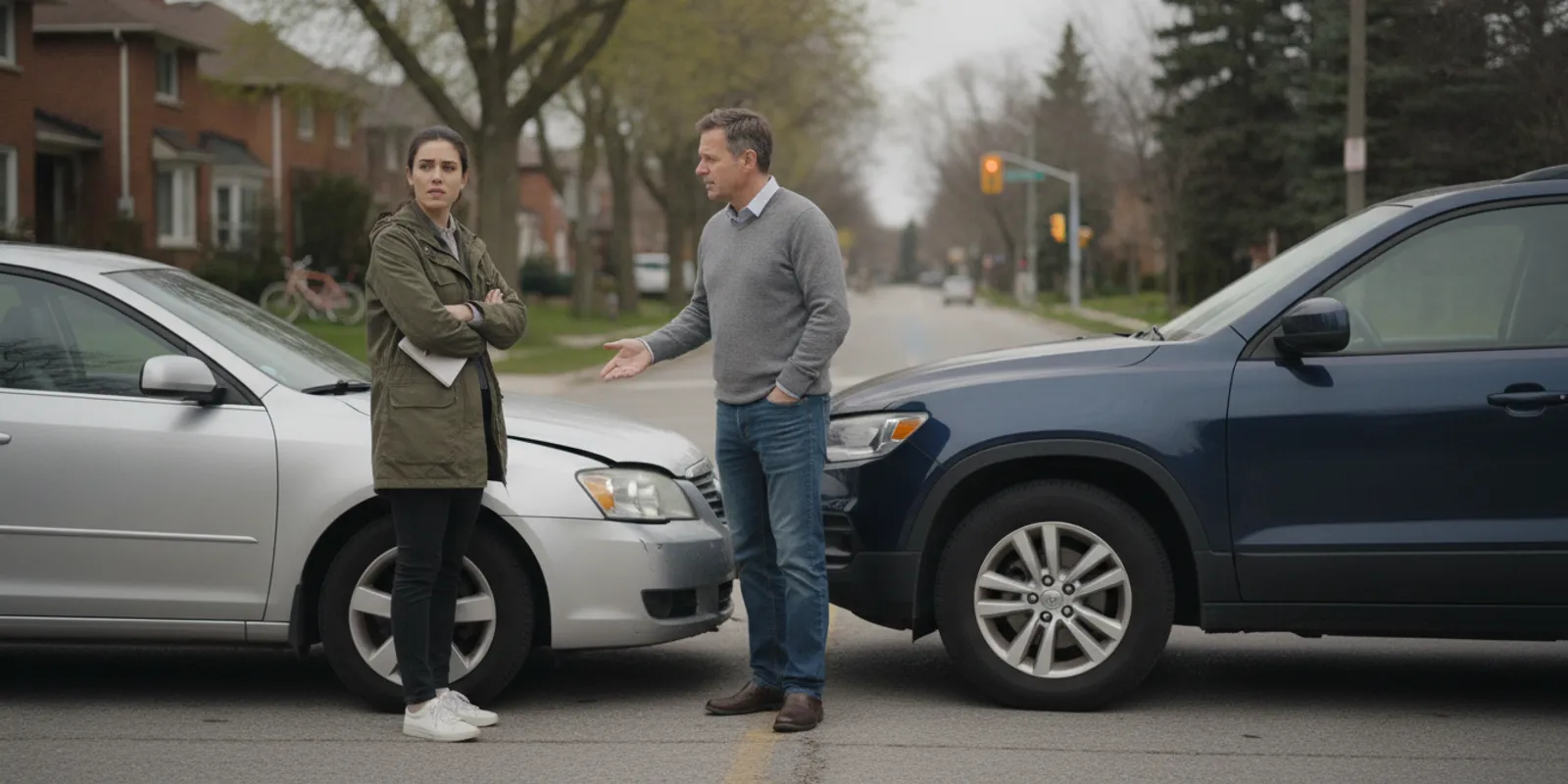

After a collision, people may remember different versions of what happened. Witness evidence after a car accident in Ontario can help clarify events, but a witness account is only one part of the available information. Knowing who saw the collision, what they observed and how to preserve their details can help you take practical next steps without assuming what a claim will prove.
Contact Hoffman Law for a free consultation or case evaluation
Why can witness evidence matter after a car accident in Ontario?
A witness may have seen a detail that the drivers could not: a vehicle’s position before impact, a traffic signal, a turn, a lane change, a sudden stop or what happened immediately afterward. Drivers are often focused on avoiding impact, checking on passengers or dealing with shock. Their attention may not cover every part of the scene.
An independent account can therefore help explain or test the accounts of the people involved. It may help identify a point that needs further investigation, clarify a sequence of events or show that a detail remains uncertain. That does not mean a witness automatically decides who was at fault. The significance of any account depends on what the person could actually observe, how clearly they remember it and how it fits with other evidence.
For example, imagine two drivers disagree about whether a vehicle changed lanes just before impact. A pedestrian may have seen the vehicles approach but not the moment they touched. That person might be able to describe the vehicles’ positions or direction of travel, while being unable to say exactly when contact occurred. The useful question is not simply whether the pedestrian “supports” one driver. It is what the person actually observed, and how that limited observation fits with the rest of the evidence.
Witness information can be relevant to a liability claim arising from a collision. It is separate from accident benefits, which may be available through an auto insurance policy regardless of who caused the crash. For more on those benefits, see Hoffman Law’s overview of accident benefits in Ontario. A witness’s description does not by itself establish an entitlement to benefits or compensation.
What kinds of witnesses may have useful information?
“Witness” can mean more than a person who watched the impact from beginning to end. Someone may have observed only one part of the event, but their account could still add context. Possible witnesses include:
- People who saw the collision: A pedestrian, cyclist, passenger in another vehicle or someone nearby may have observed the moments before impact or the collision itself.
- Passengers: A passenger may recall the direction of travel, traffic conditions or what happened inside the vehicle. Their relationship to a driver may be relevant context when their account is assessed.
- People who arrived immediately afterward: They may not have seen the crash, but could have observed the position of vehicles, road conditions, visible damage or statements made at the scene.
- People with relevant records: A nearby business, residence or transit location may have security footage. A person who was present may help identify whether such footage could exist, though access and retention are not guaranteed.
- First responders or other officials: They may have recorded observations in the course of their work. Those records are different from a bystander’s personal account and may require a formal process to obtain.
It is useful to be precise about what a person knows firsthand. Someone who heard about the collision later may be able to identify another witness or point to a record, but they did not personally observe the event.
How should you identify and record witness details?
If you are safe and able to do so, collect basic contact details as soon as practical. An injured person should not delay medical attention, put themselves in danger or feel responsible for investigating the collision. A family member or another person at the scene may be able to help.
- Ask for the person’s name and a reliable way to reach them. A phone number or email address can help later if the details are accurate and the person agrees to provide them.
- Record where they were and what they could see. Note their location, approximate distance, direction of view and whether anything blocked their sightline. A brief, factual note is more useful than a conclusion about fault.
- Write down when and how you obtained the information. Record the date and time of the conversation and who made the note. Separate the witness’s words from your own interpretation.
- Ask whether they are willing to speak again. Do not pressure them or ask them to adopt a particular version. A neutral request to preserve their recollection is appropriate.
- Keep the record secure. Save notes, messages and photographs in a place where they will not be lost. Keep original files when possible, and avoid editing or annotating the only copy.
If you cannot speak with a witness at the scene, record a description and the location where they were standing. Share those details with the appropriate authorities or your legal representative when you can. Do not post a witness’s personal information publicly.
When following up, keep the first contact low-pressure and neutral. Explain that you are trying to record who may have seen the event, and ask whether the person is comfortable speaking. Avoid sending them your own theory about fault or repeatedly asking what they remember. If they decline or do not respond, note that and move on. Their choice should be respected, and another source of evidence may be available.
What should a witness statement include?
A useful account focuses on the witness’s own observations, rather than speculation. It may be a written note, a recorded conversation or a statement taken later. The format does not guarantee that the account will be accepted or given any particular weight in a legal process.
For an early personal record, note the following where known:
- The witness’s name and contact details, and how they know anyone involved.
- Where they were before and during the collision, and what they could see or hear.
- The approximate time, weather, lighting, traffic and road conditions.
- What they observed before, during and after impact, in the order they remember it.
- What they did not see or cannot remember clearly.
- When the account was written or provided, and whether it was based on memory or a record such as a video.
These details can help someone assess the circumstances of observation and identify points that need follow-up. A clear distinction between “I saw the car enter the intersection” and “the driver must have been speeding” matters: the first describes an observation, while the second may be an inference without enough information.
Do not rewrite another person’s account to make it sound more certain or complete. If a witness makes a correction, preserve the earlier version and note when the change was made. If a formal statement or recorded interview is requested, consider getting legal guidance before providing one, especially if you are injured, unsure what is being asked or concerned about how your words may be used.
How can you preserve witness evidence after the scene?
People’s recollections can change or fade, and contact details can become outdated. A prompt, organized record is sensible, but do not assume that every record can be obtained or that it will be retained for a particular period.
- Keep a simple evidence log. Record who you spoke with, how to reach them, when you spoke and what follow-up is still needed.
- Preserve original messages and files. Keep texts, emails, photographs and video in their original form where possible. Note who created a file and when you received it.
- Make a timely, factual note of your own recollection. Write what you remember without filling gaps with guesses. Mark uncertain details as uncertain.
- Identify possible cameras promptly. If a business or property may have captured the event, note the location and ask how to make an appropriate preservation request. There is no guarantee footage exists, is clear or remains available.
- Keep records about your injuries and recovery separate. Medical records and notes about symptoms address different questions from what a witness saw. Do not ask a witness to diagnose an injury.
For a broader checklist of early steps, you can review Hoffman Law’s guide on what to do after a car accident. If there is a dispute about the collision or serious injuries, a legal representative can help determine which evidence may be relevant and how to handle it.
How are witness accounts assessed alongside other evidence?
An account is not assessed in isolation. A person reviewing a collision may consider whether the witness had a clear view, how long they observed events, what drew their attention and whether their recollection is consistent over time. They may also compare the account with photographs, vehicle damage, available video, scene details, records and the accounts of those involved.
Consistency can matter, but small differences do not necessarily mean a witness is being dishonest. A person may remember the broad sequence accurately while being uncertain about an exact distance or time. Conversely, a confident account is not automatically accurate. The circumstances of observation and the evidence that can be checked are important.
There may also be a difference between an early informal note and evidence later provided in a legal proceeding. The process and the questions asked can affect what information is available. Avoid promising a witness that a statement will determine the claim, or that a particular detail will prove fault.
| Evidence type | What it may help explain | Important limitation |
|---|---|---|
| Independent bystander account | What the person observed before, during or after the collision | Depends on vantage point, attention and memory |
| Passenger account | Events within or around the vehicle and what the passenger perceived | The person’s relationship to a driver may be relevant context |
| Photographs or video | Scene conditions, vehicle positions or recorded moments | May show only a partial view or may not exist |
| Driver accounts | Each driver’s recollection and explanation | People may have different perspectives and incomplete memories |
| Medical and other records | Injuries, treatment and related events | Do not necessarily establish how the collision happened |
These sources can complement each other, but they answer different questions. A witness might help clarify how vehicles moved; medical information may help describe the injury and its effects. Hoffman Law’s information about motor vehicle accident claims explains the firm’s related area of work.
What if witnesses disagree or no one saw the impact?
Different accounts are common when a collision unfolds quickly. One witness may have seen the approach but not the impact; another may have noticed the traffic signal but not the vehicles’ positions. People may also recall details differently after discussing the event with others.
Do not try to make accounts match or ask witnesses to coordinate what they will say. Record the differences accurately and preserve the information as it was given. A legal professional can assess whether the differences matter and whether there are other sources that may help clarify the event. For example, a photograph may show a scene feature, while a witness may describe what happened immediately beforehand.
If no independent witness saw the impact, that does not automatically mean there is no useful evidence or no possible claim. The drivers’ accounts, physical evidence, photographs, video if available, and other records may still be relevant. It is important not to treat the absence of a witness as a conclusion about responsibility or eligibility.
What should you do if an insurer asks about a witness?
An insurer may ask for information as it investigates a collision or an insurance claim. Before responding, be clear about what you know directly and what someone else told you. Do not guess, embellish or present uncertain details as fact. Keep a copy of any communication and make a note of what you provided.
If you have serious injuries, are being asked to provide a recorded account, or are uncertain about a request for a witness’s contact information or statement, consider getting legal advice before responding. You can also read about when to contact a car insurance lawyer. This is general information, not a determination of what you should disclose in your particular situation.
Witness evidence is only one issue that may arise after a collision. If an injury affects memory, concentration or communication, the person’s needs should be considered when preserving their own recollection and arranging discussions. Hoffman Law also provides information about brain injury claims in Ontario. If you are concerned about timing for an injury claim, see the firm’s overview of Ontario personal injury limitation periods and seek advice about your circumstances.
Ontario government information is available through Ontario.ca. For legal guidance about how witness information may relate to your circumstances, a lawyer can review the available facts and explain possible next steps.
Request a free case evaluation from Hoffman Law
Frequently Asked Questions
Does a witness have to be a stranger to the drivers?
No. A passenger, family member or other person who knows someone involved may still have firsthand observations. Their relationship may be relevant context when the account is assessed, but it does not by itself answer whether the information is useful or reliable.
Should I ask a witness to write a statement at the scene?
You can ask for contact information and whether the person is willing to speak later, but do not pressure them or direct what they should say. If they choose to provide an account, it should reflect their own recollection. Prioritize safety and medical care over gathering evidence.
Can a witness’s account prove who caused the accident?
A witness account may help clarify disputed events, but it does not automatically determine fault. It is considered in context with the witness’s opportunity to observe and other available evidence. The outcome depends on the facts and applicable law.
What if I only found a witness weeks later?
Write down when and how you located the person, preserve their contact information with their permission, and avoid shaping their recollection. A later account may still be relevant, though timing and memory may be considered. Ask a lawyer how to handle it if the collision caused serious injury or a dispute has arisen.
Get guidance on preserving the information
Witness details can be one useful part of understanding a collision, but collecting them should never come at the expense of safety, treatment or an accurate record. If you have been seriously injured and are unsure how an account may fit with your insurance or injury claim, Hoffman Law offers free consultations and case evaluations to discuss possible next steps.