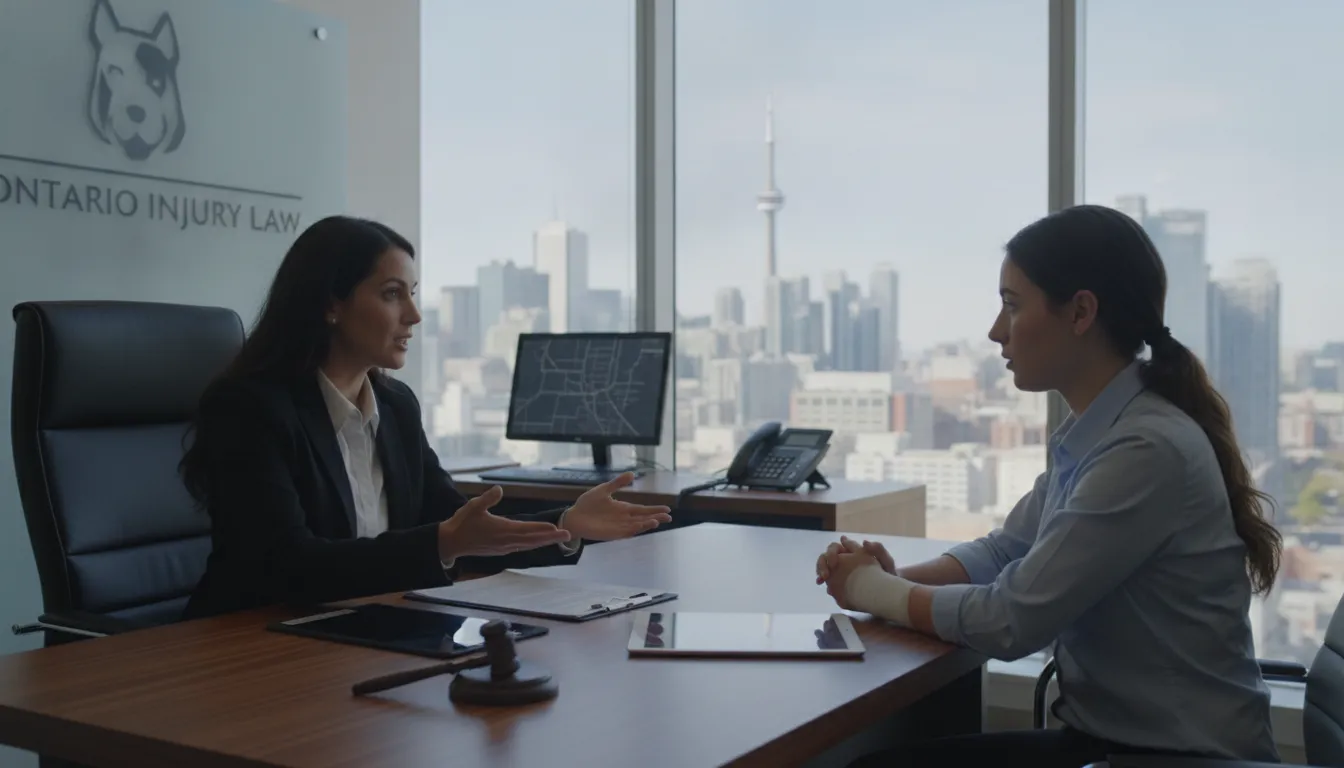

Many people hesitate to contact a lawyer after a dog bite because they assume the injury is too minor or the owner will take responsibility. Those assumptions can create problems later. Symptoms may worsen, scars may become permanent, and the owner’s insurer may dispute liability or minimize your losses. A free consultation with a dog bite lawyer can give you a clearer understanding of your options without requiring an immediate decision to start a lawsuit. Hoffman Law represents injured people in Toronto and throughout Ontario. This guide explains what to do after an attack, how claims work, and what to consider before speaking with an insurer.
Key Takeaways
- Seek care and report the bite promptly: Get medical attention, contact local public health and animal services, and keep copies of all related records.
- Document the injury and resulting losses: Photograph wounds and scarring, gather witness information, preserve damaged clothing, and track treatment costs, missed income, and emotional effects.
- Speak with a lawyer before contacting an insurer: Ontario’s Dog Owners’ Liability Act may support a claim even without a previous attack. Hoffman Law offers free consultations and contingency-fee representation across Ontario.
What Should You Do After a Dog Bite in Ontario?
A dog bite can cause more than a visible wound. Punctures may become infected, while a serious attack can lead to scarring, nerve damage, anxiety, or time away from work. Your first priority is to get away from the animal and obtain medical care. Once you are safe, preserve information that may help show what happened and how the injury affected your life.
Try to act promptly, even if the bite initially seems minor. Early treatment can reduce the risk of complications, and early documentation may help support a future claim. If you are unsure what to do next, Hoffman Law offers a free case evaluation for people injured in Toronto and throughout Ontario.
Get emergency and follow-up care
Move away from the dog and find a safe place before helping yourself or someone else. Call 911 if the bleeding is severe, the wound is deep, the bite affects your face or neck, or you feel faint or seriously unwell. Apply gentle pressure with a clean cloth to slow bleeding. When it is safe, wash the wound thoroughly with soap and running water.
See a doctor, visit an emergency department, or attend an urgent care centre even if the injury appears small. A dog bite may require antibiotics, a tetanus shot, wound closure, or an assessment for nerve and tendon damage. Medical records can also document the injury at an early stage, which may be important for a future personal injury claim. Follow your treatment instructions and attend recommended appointments. Seek prompt care if you develop redness, swelling, warmth, discharge, fever, or worsening pain.
Report the attack to public health and animal services
Report the bite to your local public health unit and animal services, particularly if the skin was broken. In Toronto, you can contact Toronto Animal Services for guidance about an animal-related incident. If the attack happened elsewhere in Ontario, contact the municipality or public health unit responsible for that location.
Reporting creates an official record and allows authorities to assess the dog, confirm vaccination information, and determine whether observation or quarantine is needed. Public health officials can also advise you about possible rabies exposure and any recommended treatment. Ask for the report or incident number, then record when you made the report, who took it, and what information you provided. Keep copies of emails, forms, and follow-up instructions.
Safely identify the dog owner and insurance
If it is safe, ask the owner for their full name, address, telephone number, and email address. Request the dog’s name, licence information, and vaccination details. Do not argue with the owner or return to an unsafe location to collect information. If the owner leaves, witnesses, animal services, or police may help identify them.
You can also ask whether the owner has home, tenant, condominium, or another type of liability insurance. Do not pressure the owner to admit fault, sign a statement, or agree to a settlement at the scene. Insurance information may help identify the correct claims process, but you do not need to negotiate compensation yourself. If the owner refuses to cooperate, report that to animal services or public health and provide every identifying detail you have. A lawyer can later investigate coverage and other potentially responsible parties.
Photograph your injuries, clothing, and the scene
Take clear photographs as soon as you can, provided this does not delay medical care. Photograph each wound from several angles, including close-up images and wider photos showing where the injury is located. Continue taking pictures as bruising, swelling, scabbing, infection, or scarring develops. If the injury affects your face, hands, or another visible area, keep images that show how it changes over time.
Keep the clothing and shoes you wore during the attack. Do not wash, repair, or discard them before photographing any damage. Photograph torn fabric, blood, fences, gates, warning signs, and conditions that may have allowed the dog to reach you. Save original files and back them up securely. Add the date and a brief description to each file so you can later identify when and where the photograph was taken.
Record witnesses, video, and incident details
Write down what happened while your memory is fresh. Include the date, time, exact location, direction you were travelling, what the dog did, how the attack ended, and whether anyone tried to control the animal. Record the owner’s words and actions as accurately as possible. Avoid guessing or exaggerating details that you cannot remember clearly.
Collect the names and contact information of anyone who saw the attack or its immediate aftermath. Nearby businesses, residences, and property managers may have security footage or doorbell video. Do not trespass or confront anyone for recordings. Instead, note where cameras are located and politely ask whether the footage can be preserved. Keep texts, emails, social media messages, and photographs connected to the incident. This evidence may clarify ownership, warning signs, prior complaints, and the circumstances of the bite.
Preserve medical, expense, and income records
Create a file for every document related to the injury. Keep hospital and clinic records, prescriptions, receipts, referrals, physiotherapy notes, photographs, and public health correspondence. Between appointments, record symptoms such as pain, limited movement, sleep problems, fear of dogs, and difficulty completing everyday activities.
Track expenses for medication, transportation, dressings, counselling, rehabilitation, and household assistance. If you miss work, keep pay stubs, employer correspondence, benefit records, and a log of the dates and hours missed. Ask your employer to document changes to your duties or income when appropriate. These records can help assess both immediate losses and longer-term effects. Hoffman Law’s personal injury services include claims involving serious injuries, disability, and losses arising from accidents.
Avoid recorded statements and quick settlements
The dog owner’s insurer may contact you soon after the incident. An adjuster may request a recorded statement, medical authorization, photographs, or details about your recovery. Even a statement about where and when the bite occurred can be misunderstood or used later to challenge your claim, particularly before the full extent of your injuries is known.
You do not have to accept the first settlement offer or sign a release before understanding the injury’s likely impact. Scarring, infection, psychological symptoms, and future treatment needs may become clearer over time. Ask the adjuster to communicate in writing, then speak with a lawyer before giving a recorded statement or signing documents. Hoffman Law provides free consultations and can explain your options before you respond to an insurer.
What Legal Rights Do You Have After a Dog Bite?
A dog bite can create consequences that continue long after the initial emergency visit. You may need treatment for infection, nerve damage, reduced movement, or scarring. You may also miss work, pay for medication and rehabilitation, or develop anxiety and trauma after the attack. Ontario law may allow you to seek compensation for these losses from the dog’s owner and, in some cases, other parties.
The evidence behind your claim matters. Medical records, photographs, witness details, incident reports, and proof of expenses can help show what happened and how the injury has affected your life. A personal injury lawyer can assess the circumstances, explain your possible claims, and help you understand the deadlines that may apply.
Your legal rights will depend on the facts, including where the attack happened, who owned or controlled the dog, whether anyone else contributed to the incident, and the nature of your injuries.
Use the Dog Owners’ Liability Act
Ontario’s Dog Owners’ Liability Act is an important part of many dog bite claims. In general, the dog’s owner may be responsible for damages caused by a bite or attack. You usually do not have to prove that the owner knew the dog was dangerous or had acted aggressively in the past.
The Act may apply when a dog bites or attacks someone on public or private property. It can also address injuries caused when a dog chases or otherwise attacks a person. The details still matter. Your lawyer may need to confirm who owned the dog, who had control of it, what occurred immediately before the incident, and whether any legal defence applies.
The Act does not mean every claim has the same outcome. The nature of the injury, the evidence available, and the arguments raised by the owner or insurer can all affect your case.
Understand owner liability without a prior attack
You do not generally lose the right to pursue a claim simply because the dog had never bitten anyone before. Ontario’s rules can impose liability without proof of a previous attack, complaint, or warning. A history of aggression may provide additional evidence, but it is not usually required to establish responsibility for a bite.
This is important if the owner says the dog was friendly or had never caused a problem. Those statements do not, by themselves, determine whether you have a claim. The focus should remain on what happened, the injuries you suffered, and the losses that followed.
An insurance adjuster may ask questions about the dog’s history, your actions, and the circumstances of the incident. Avoid making assumptions about your legal rights or accepting an explanation before obtaining advice. A lawyer can review the evidence and respond to liability arguments on your behalf.
Consider negligence and occupiers’ liability
The Dog Owners’ Liability Act is not the only possible basis for a claim. Negligence may also be relevant when someone failed to take reasonable steps to control or secure a dog. Examples could include leaving a gate open, allowing a dog to roam, ignoring leash requirements, or failing to warn someone about a known risk.
The property owner or person responsible for the location may also be relevant. Under Ontario’s Occupiers’ Liability Act, an occupier generally has duties related to keeping a property reasonably safe. An occupier could be a homeowner, tenant, business, landlord, or another person with responsibility for the premises.
Whether occupiers’ liability applies depends on the circumstances. Your lawyer may examine how you entered the property, who controlled the dog, whether warnings were provided, and whether the property created or contributed to the risk.
Identify employers, municipalities, and other liable parties
The dog’s owner may not be the only party connected to the incident. If an employee was handling the dog as part of their work, the employer may need to be investigated. A business, landlord, property manager, tenant, or contractor could also be relevant if they controlled the location or had information about the risk.
Municipal liability involves separate legal and factual questions. For example, a municipality may have records of previous complaints or responsibility for animal control services. That does not make the municipality automatically liable for an attack. You would generally need evidence that its conduct or failure to act contributed to your injuries.
Identifying every potentially responsible party early can help preserve important records. Relevant evidence may include animal control files, property records, employment information, security footage, prior complaints, and communications between the parties.
Prove the attack, injury, and causation
A dog bite claim needs evidence connecting the incident to your losses. You will generally need to establish that the attack occurred, identify the dog and owner where possible, and show that you suffered an injury. Medical records can document the wounds, treatment, symptoms, and expected recovery.
You may also need to connect the bite to specific expenses, missed work, or psychological symptoms. Keep records from emergency departments, family doctors, specialists, therapists, and rehabilitation providers. Follow-up appointments can be particularly important when symptoms continue or develop after the first visit.
Photographs, witness information, public health reports, animal control records, and messages exchanged after the incident may support your account. Write down what happened while your memory is fresh, including the location, time, people present, dog description, and events immediately before and after the attack.
Address provocation, trespass, and shared responsibility
The dog’s owner or insurer may argue that you provoked the animal, entered the property without permission, or contributed to the incident in another way. These issues can affect liability, but they do not automatically eliminate your claim. The details of your entry and conduct matter, particularly if you were invited, working on the property, or using a public area.
Give your lawyer a complete and accurate account of what happened. Include any interaction with the dog before the bite, instructions given by the owner, and what you did immediately before the attack. Leaving out details can make it harder to respond to the insurer’s position later.
When more than one person may have contributed to an injury, Ontario’s Negligence Act may be relevant. A lawyer can assess whether shared responsibility applies and how it could affect the compensation available.
Document physical, psychological, and long-term injuries
Dog bites can cause puncture wounds, infection, tendon damage, nerve injuries, limited movement, and permanent scarring. The emotional effects may be serious as well. Some people experience fear around dogs, sleep problems, anxiety, depression, or post-traumatic stress symptoms after an attack.
Tell your healthcare providers about all symptoms, including changes that do not seem directly related to the wound. Continue recommended treatment and keep a record of appointments, medication, therapy, restrictions, and out-of-pocket costs. If you stop treatment, an insurer may question whether your symptoms are as serious as reported.
Photographs taken at reasonable intervals can show how bruising, wounds, and scars change over time. Keep copies of medical opinions about future treatment, cosmetic procedures, reduced function, or permanent limitations. These records can help assess how the injury affects work, daily activities, relationships, and future care needs.
Meet limitation periods and special notice deadlines
Ontario’s Limitations Act generally provides a two-year basic limitation period for many personal injury claims. The calculation is not always straightforward. The relevant date may depend on when you discovered, or should have discovered, that you had a claim. Different rules may apply to children, people lacking legal capacity, and claims against certain defendants.
Special notice requirements can arise when a municipality or another public body may be involved. These deadlines can be significantly shorter than the deadline for starting a lawsuit. A notice requirement and a limitation period are separate issues, so meeting one does not necessarily satisfy the other.
Do not wait until treatment ends before seeking legal advice. A lawyer can identify the deadlines that may apply, advise you about required notices, and help protect your claim while you continue recovering.
How Can a Dog Bite Lawyer Help?
A dog bite can leave you dealing with much more than an emergency-room visit. You may face infection, painful treatment, permanent scarring, missed work, anxiety, or a fear of dogs that affects your everyday life. Some injuries also develop over time, especially when a bite causes nerve damage, reduced movement, or psychological trauma.
At the same time, an insurance company may contact you before you understand your legal rights. An adjuster may ask for a recorded statement, request access to your medical history, or offer a quick settlement. Although the offer may seem convenient, it may not account for future treatment, lost income, scarring, or the full effect of the injury.
A dog bite lawyer can manage the legal and insurance aspects of your case while you focus on recovery. This may include assessing a claim under Ontario’s Dog Owners’ Liability Act, investigating what happened, identifying available insurance, gathering evidence, and seeking compensation for your losses.
A lawyer can also explain your options before you make decisions that may affect your claim. Hoffman Law offers free consultations and case evaluations to help injured people understand their legal position and determine the next appropriate step.
Explain your rights during a free case evaluation
During a free consultation, a dog bite lawyer can listen to what happened and explain your legal rights in plain language. You can discuss where the attack occurred, whether the dog was leashed, whether the owner was present, what injuries you suffered, and whether anyone witnessed the incident.
The lawyer may ask about your medical treatment, time away from work, photographs, communications with the owner, and contact with an insurer or animal services. These details can help determine whether you may have a claim under Ontario’s Dog Owners’ Liability Act, negligence law, occupiers’ liability law, or another legal avenue.
A consultation does not usually require you to decide immediately whether to hire a lawyer. Instead, it gives you an opportunity to understand the issues, deadlines, evidence, and possible next steps. You can also ask how the lawyer handles fees and communication before making an informed decision.
Identify liability, insurance, and available claims
Dog bite cases may involve more than one legal issue. Under Ontario’s Dog Owners’ Liability Act, a dog owner may be responsible for harm caused by the dog, including when the dog has no known history of attacking anyone. Depending on the circumstances, negligence or occupiers’ liability may also apply.
A lawyer can identify who may be legally responsible and determine whether insurance coverage is available. The owner’s home or tenant insurance may respond to the claim. Other policies could apply if the incident involved a business, rental property, municipality, landlord, or employee acting within the scope of their work.
The available claim depends on the facts. A lawyer can assess the incident before you spend time communicating with the wrong party or insurer. Reviewing the details carefully is important when deciding which personal injury services may apply to your circumstances.
Investigate the owner, dog history, witnesses, and location
Important evidence can disappear quickly after an attack. Security footage may be overwritten, witnesses may forget what they saw, and property records or online listings may change. A lawyer can investigate the location, identify witnesses, request available video, and document the conditions that led to the incident.
The dog’s history may also provide useful information. Animal services, public health, veterinary, or prior complaint records could help establish what the owner knew about the dog’s behaviour. However, you do not necessarily need to prove a previous attack to pursue a claim in Ontario.
A lawyer can also assess whether another person, business, or property owner contributed to the incident. This may involve preserving evidence, contacting witnesses, and obtaining records that are difficult to access without legal assistance. Early investigation can make it easier to establish what happened and who may be responsible.
Gather medical records and treatment evidence
Medical evidence connects the attack to your injuries and shows the treatment you require. A lawyer can help gather hospital records, emergency-room notes, physician reports, specialist assessments, photographs, prescriptions, physiotherapy records, and other relevant documents.
Your records should cover more than the initial wound. They may show nerve damage, infection, surgery, reduced movement, ongoing pain, sleep problems, or restrictions at work and home. Psychological symptoms, including anxiety and trauma, should also be reported to your doctor and documented in your medical file.
Continue attending follow-up appointments and follow medical advice. If you stop treatment without medical guidance, an insurer may argue that your injuries were minor or that you failed to take reasonable steps to recover. A lawyer can also work with your treatment providers to understand your prognosis and potential future care needs.
Document scarring, disfigurement, and psychological trauma
Scars and disfigurement can affect your confidence, relationships, work, and daily routines. Take clear photographs as the injury heals, including images from different angles and distances. Keep documenting changes over time instead of relying only on photographs taken immediately after the bite.
A lawyer can seek medical or expert evidence about whether a scar is likely to be permanent, whether revision surgery may help, and how the injury affects your life. Permanent scarring may be particularly significant when the bite affects your face, hands, or another visible area. Pain and restricted movement can continue even after the skin has healed.
The emotional effects also deserve attention. Anxiety, nightmares, fear of animals, embarrassment, and post-traumatic stress can follow a serious attack. Tell your doctor about these symptoms and consider appropriate counselling or psychological treatment. Medical records can help show that the psychological injury is real, ongoing, and connected to the attack.
Calculate current and future financial losses
A dog bite lawyer can calculate more than the medical bills you have already received. Potential losses may include medication, rehabilitation, counselling, transportation to appointments, home assistance, and income lost while you recover.
The lawyer can also assess future expenses. You may need additional surgery, scar treatment, therapy, assistive equipment, or ongoing psychological care. If the injury limits your ability to perform your current job or reduces your future earning capacity, those losses may form a significant part of your claim.
Save receipts, pay stubs, tax documents, employer records, and notes about missed shifts or reduced duties. Keep a simple record of your symptoms and the help you need at home. Potential compensation may include medical expenses, lost income, pain and suffering, and other losses connected to the injury.
Handle adjusters, recorded statements, and settlement offers
An insurance adjuster may contact you soon after the incident. Although the conversation may seem informal, the adjuster is assessing the insurer’s financial exposure. Questions about the attack, your symptoms, prior health, or activities after the incident can affect how the insurer evaluates your claim.
Speak with a lawyer before giving a recorded statement or signing documents. Be honest, but avoid guessing, minimizing your injuries, or making assumptions about fault. Keep copies of all correspondence and avoid posting photographs or comments about the incident or your recovery without considering how an insurer could interpret them.
You should also be cautious about accepting a quick settlement. Your full prognosis may not be clear at the beginning of treatment, particularly when scarring, nerve damage, or psychological symptoms are involved. A lawyer can review an offer, explain what it covers, and advise whether it reflects your likely past and future losses.
Negotiate with insurers or represent you in court
A lawyer can prepare a demand package that sets out liability, medical evidence, financial losses, and the effect of the injury on your life. The package may include photographs, witness information, treatment records, expert opinions, income documentation, and a summary of your ongoing limitations.
Your lawyer can negotiate directly with the insurer and respond when an adjuster disputes the severity of your injury, questions your treatment, blames you for the incident, or offers less than the evidence supports. Having one person manage these discussions can also reduce the stress of repeated calls and requests for information.
If the insurer will not make a fair offer, your lawyer can start a lawsuit and represent you throughout the litigation process. That does not mean every case will go to trial. Many claims resolve through negotiation or mediation, but a lawyer can help protect your position if court proceedings become necessary. Hoffman Law represents injured people in claims against insurance companies throughout Ontario through its personal injury services.
Correct common misconceptions about dog bite lawyers
Some people assume they do not need a lawyer because the injury seems manageable or the dog owner appears cooperative. Others worry that hiring a lawyer automatically means going to court. Neither assumption is necessarily correct.
A consultation can be useful even when liability appears obvious. The full effects of scarring, nerve damage, psychological trauma, or lost income may not be clear at first. An owner’s apology also does not identify available insurance or determine how much compensation may be appropriate.
Hiring a lawyer does not require you to file a lawsuit immediately. Your lawyer may resolve the claim through discussions with the insurer, but can recommend litigation if negotiations do not produce a fair result. Each case depends on its evidence, injuries, deadlines, and coverage. A free case evaluation can help you decide whether legal representation is appropriate for your circumstances.
What Compensation Can a Dog Bite Lawyer Pursue?
A dog bite can create expenses and losses that continue long after the wound has closed. Treatment may involve emergency care, prescriptions, specialist appointments, physiotherapy, counselling, or reconstructive surgery. You may also lose income, need help at home, or experience lasting fear that changes your daily routine.
In Ontario, the compensation available depends on the circumstances of the attack, the seriousness of your injuries, and the evidence supporting your losses. Under the Dog Owners’ Liability Act, a dog owner may be responsible for injuries caused by a bite or attack, even if the dog has never shown aggressive behaviour before. Other legal principles may also apply, depending on where the incident occurred and who controlled the property.
A dog bite lawyer can assess your losses, identify potentially responsible parties, and seek compensation from the appropriate insurer. Because every claim is different, a lawyer should review your medical records, financial losses, recovery outlook, and the circumstances of the attack before estimating its potential value.
Cover medical treatment, medication, and rehabilitation
Compensation may include reasonable medical expenses caused by the dog bite. These expenses can include ambulance transportation, emergency treatment, physician visits, medication, wound care, diagnostic testing, and specialist appointments. A wound that initially appears minor may require additional care if it becomes infected, causes nerve damage, or heals poorly.
You may also need physiotherapy, occupational therapy, rehabilitation, or other services to restore movement and function. Keep invoices, receipts, treatment plans, and explanations from your healthcare providers. These records help connect each expense to the attack and show whether your treatment is likely to continue.
Some services may not be fully covered by provincial health insurance or private benefits. A lawyer can review those gaps and determine whether they form part of your claim.
Fund cosmetic surgery, reconstruction, and future care
Deep bites can damage nerves, muscles, and soft tissue. They may leave scars that require dermatological treatment, laser therapy, plastic surgery, or other procedures. When an injury affects the face, hands, or another visible area, reconstructive treatment may be recommended for functional as well as cosmetic reasons.
A claim may account for reasonably supported future treatment, not only expenses you have already paid. Medical opinions can help establish whether you are likely to need additional surgery, scar treatment, medication, counselling, or long-term care. Your lawyer may consult specialists to estimate those needs and their expected costs.
Try not to assume that an early settlement offer covers future care. Accepting a settlement usually means signing a release, which may prevent you from seeking more compensation later if your condition worsens.
Recover lost income and reduced earning capacity
A dog bite may force you to miss work for medical appointments, surgery, recovery, or psychological treatment. You may be able to claim income lost during that period, supported by pay statements, employer records, tax documents, and medical notes. If you operate a business, financial statements and other records may help demonstrate the effect on your earnings.
Some injuries create longer-term problems. Pain, limited mobility, visible scarring, or trauma may affect your ability to return to the same job, work the same hours, or pursue future opportunities. In those cases, compensation may address reduced earning capacity.
The assessment may consider your age, occupation, education, income history, restrictions, and expected recovery. Keep your lawyer updated about missed shifts, modified duties, job changes, or difficulties completing tasks at work.
Claim pain, suffering, scarring, and disfigurement
Compensation may recognize the physical pain and discomfort caused by the bite, along with the effects of treatment and recovery. It can also address permanent scarring, disfigurement, loss of sensation, reduced movement, and other lasting changes.
The location and appearance of a scar may matter, particularly when it is visible or affects an important function. Your lawyer may collect photographs over time, treatment records, specialist opinions, and your account of how the injury affects daily activities, relationships, confidence, and social life.
Scars can change as they heal, so continuing to photograph them may be useful. Record the dates and keep the images in their original form. Do not alter or filter photographs that may later be used as evidence.
Address anxiety, trauma, and post-traumatic stress treatment
A dog attack can cause more than physical injuries. You may develop anxiety around dogs, sleep problems, panic symptoms, depression, or post-traumatic stress. These symptoms can affect work, travel, relationships, exercise, and ordinary activities such as walking through your neighbourhood.
Mental health treatment may form part of the claim when it is connected to the incident and supported by appropriate evidence. Counselling, psychotherapy, psychiatric appointments, and prescribed medication may be compensable expenses. A medical professional can also document the diagnosis, symptoms, treatment plan, and expected recovery.
Tell your doctor about emotional symptoms rather than trying to manage them alone. Prompt care supports your health and creates a clearer record of how the attack affected you.
Recover housekeeping, caregiving, travel, and other expenses
If your injuries make cooking, cleaning, shopping, childcare, or personal care difficult, you may have additional costs. A claim may include paid housekeeping or caregiving. In some circumstances, it may also account for the value of assistance provided by family members or friends.
Other out-of-pocket expenses may include transportation to treatment, parking, mobility aids, special clothing, dressings, and household changes. Keep a running record of these costs, including the date, amount, purpose, and connection to your injury.
Ask family members or friends to record the help they provide, including the tasks, hours, and dates. This information can support a claim for necessary assistance, even when no formal invoice exists.
Pursue Family Law Act claims for family losses
In some circumstances, close family members may have their own claims for losses arising from your injury under Ontario’s Family Law Act. These claims are separate from your personal injury claim and may relate to lost care, guidance, companionship, or financial support.
A spouse, parent, child, or other eligible relative may need to show how your injuries affected the relationship or support they received. The evidence could include changes in household responsibilities, caregiving, family activities, and financial contributions.
The availability and value of a Family Law Act claim depend on the circumstances. Speak with a lawyer before assuming that a family member’s losses are automatically included in your claim. Separate deadlines or procedural requirements may apply.
Understand what affects a claim’s value
There is no standard payout for a dog bite. The value of a claim may depend on the severity of the injuries, the number and location of scars, the need for surgery, the effect on work, and whether symptoms are permanent. Psychological harm, future care needs, and changes to everyday activities may also matter.
Liability and evidence can affect the outcome as well. A lawyer may examine who owned or controlled the dog, where the attack occurred, whether witnesses saw it, whether the incident was reported promptly, and whether another party contributed to the injury.
Detailed medical and financial records make it easier to connect your losses to the dog bite. Keep copies of reports, receipts, photographs, employment documents, and correspondence with insurers.
Recognize why no lawyer can guarantee a payout
A lawyer can explain your legal options and pursue compensation, but no lawyer can promise a specific result. A claim may require proof that the dog caused the injury, identification of the owner, evidence of your losses, and information about available insurance coverage.
An insurer may dispute the severity of your injuries, the amount claimed, or responsibility for the incident. The outcome may also depend on witness evidence, medical opinions, limitation periods, and whether another party shares responsibility.
Be cautious of anyone who guarantees a settlement or gives you a precise value before reviewing the evidence. During a free consultation with Hoffman Law, you can discuss what happened, your injuries, and the losses you have experienced. The firm can then explain the possible next steps and provide a realistic assessment of your situation.
How Do Ontario Dog Bite Claims Work?
An Ontario dog bite claim usually begins with medical care, reporting, and an investigation into what happened. The claim may rely on the Dog Owners’ Liability Act, negligence, occupiers’ liability, or more than one legal basis. The appropriate approach depends on where the attack occurred, who owned or controlled the dog, whether another person or business contributed to the incident, and the seriousness of your injuries.
The process may involve identifying available insurance, collecting evidence, documenting your recovery, and calculating financial losses. Some claims resolve through negotiations with an insurer, while others require a lawsuit. Because important evidence can disappear and limitation periods may apply, it is wise to seek legal advice early. A personal injury lawyer can help protect your rights while you focus on medical treatment and recovery.
Start with a consultation and case assessment
A consultation gives you an opportunity to explain what happened and learn how Ontario law may apply to your circumstances. A lawyer will usually ask about the date and location of the attack, the dog’s owner, any witnesses, your injuries, and the steps you have taken since the incident.
Bring photographs, medical records, incident reports, witness information, receipts, and correspondence from an insurer. If you are unsure whether you have a claim, an early assessment can still clarify your options and identify important next steps. Hoffman Law offers free consultations for people seeking advice about personal injury claims, including serious injuries and insurance disputes.
Notify the dog owner and relevant insurers
You should identify the dog’s owner and provide appropriate notice of the incident, but avoid arguing about fault or making detailed statements before receiving legal advice. Keep your communication factual and save copies of emails, text messages, and letters. Record the owner’s name, address, telephone number, and any information they provide about the dog.
You may also need to notify your own insurer, particularly if you have coverage for medical expenses, income replacement, or other accident-related benefits. If an adjuster contacts you, ask for requests in writing and consider speaking with a lawyer before giving a recorded statement or signing documents. A casual comment about the incident can be misunderstood and later used against you.
Identify homeowner, tenant, and other liability coverage
Homeowner and tenant insurance policies often include personal liability coverage that may respond to a dog bite claim. The relevant policy may belong to the dog owner, a tenant, a property owner, or another person responsible for the animal. Coverage depends on the policy language and the specific circumstances of the attack.
A lawyer can help identify the relevant insurer and determine whether more than one policy may apply. For example, a business, landlord, condominium corporation, or employer could have separate coverage depending on where the attack occurred and who controlled the dog. Do not assume an insurer’s initial position resolves the coverage question. Policy exclusions, notice requirements, and competing liability issues may need careful review.
Build evidence of liability and damages
Evidence should establish both how the attack happened and how it affected you. Take clear photographs of your injuries, torn clothing, the location, fencing, warning signs, and any hazards that may have contributed to the incident. If possible, preserve the clothing and shoes you were wearing without washing or repairing them.
Record witnesses’ names and contact details, and ask whether anyone captured video or photographs. Security footage can be overwritten quickly, so a lawyer may send a preservation request to a homeowner, business, condominium corporation, or municipality. The investigation may also examine whether the owner knew about previous aggressive behaviour, failed to restrain the dog, or ignored applicable safety requirements.
Track treatment, recovery, and future care needs
Follow your healthcare providers’ advice and attend recommended appointments. Keep a record of emergency visits, family doctor appointments, specialist assessments, physiotherapy, counselling, medication, dressings, and other treatment. Note symptoms such as pain, numbness, limited movement, sleep problems, fear of dogs, or difficulty returning to normal activities.
Dog bite injuries can change over time. A wound may heal while leaving permanent scarring, nerve damage, reduced function, or psychological trauma. Your lawyer may request medical opinions about future treatment, cosmetic procedures, counselling, or functional limitations. Hoffman Law’s personal injury services include assessing the broader effects of serious injuries, not only the initial emergency treatment.
Prepare a demand package
A demand package presents your claim to the insurer in an organized way. It commonly includes a description of the incident, evidence supporting liability, medical records, photographs, treatment information, income documentation, receipts, and an explanation of your past and expected losses.
The package should describe the injury’s effect on your work, household responsibilities, relationships, recreation, and emotional well-being. It may also address permanent scarring, disfigurement, reduced mobility, counselling needs, and future care. A lawyer will assess which documents are useful and whether the evidence is complete before making a settlement proposal. The goal is to provide a clear, evidence-based evaluation without overstating facts.
Negotiate with the insurance company
After receiving the claim, an insurer may investigate the incident, request documents, arrange an examination, or ask questions about your medical history. The adjuster’s role is to protect the insurer’s interests, so answer honestly while avoiding speculation or unnecessary detail. Keep copies of everything you send and receive.
A personal injury lawyer can communicate with the adjuster, respond to requests, challenge an unfair assessment, and explain why the evidence supports your position. Negotiations may involve several offers and counteroffers. The amount discussed should reflect your injuries, treatment, income loss, future needs, and the strengths and weaknesses of the liability evidence. You do not have to accept an offer simply because an insurer presents it as final.
Review settlement offers and releases carefully
A settlement offer should be reviewed as a legal document, not just a dollar amount. It may require you to sign a full and final release, which can prevent you from making further claims connected to the incident. It may also address legal fees, expenses, tax treatment, confidentiality, and the timing of payment.
Ask what you would receive after deductions and whether the proposed settlement accounts for future treatment, permanent scarring, lost income, and possible complications. Once a release is signed, changing your mind may not be possible. Your lawyer should explain the practical effect of the agreement and confirm that you understand which rights you are giving up before you accept.
Start a lawsuit before the deadline
Ontario’s Limitations Act, 2002 generally provides a two-year limitation period for many injury claims, although the applicable deadline can vary. The clock may not operate in the way an injured person expects, and special rules may apply to minors, people lacking capacity, claims involving municipalities, or other defendants.
Some claims also require notice within a much shorter period. Missing a deadline can seriously affect your right to compensation, even when the underlying claim has merit. Do not wait until treatment is finished before getting legal advice. A lawyer can identify the deadlines that apply, serve necessary notices, and issue a claim when appropriate.
Prepare for discovery, mediation, and trial
If a lawsuit begins, both sides exchange relevant documents and answer questions during the discovery process. You may need to describe the incident, your symptoms, your prior health, your treatment, your work history, and the effect of the injury on your daily life. Your lawyer will help you prepare and explain what to expect.
The parties may attend mediation to discuss settlement with help from a neutral mediator. If the claim does not resolve, it may proceed to trial, where witnesses and expert evidence can be presented. Preparation includes reviewing records, assessing credibility issues, responding to the defence, and organizing evidence about liability and damages. Many procedural steps occur before a trial date is reached.
Understand why many claims settle before trial
A claim may settle when both sides recognize the risks, cost, delay, and uncertainty of continuing to trial. Once the evidence is exchanged, each party can better assess the likelihood of proving liability and the value of the injuries. Settlement can also give an injured person earlier access to funds for treatment and other needs.
Settlement discussions can happen before a lawsuit, during discovery, at mediation, or shortly before trial. Resolving a claim is a personal decision, and no lawyer can promise a particular result. Your lawyer should explain the strengths and weaknesses of the offer, compare it with the possible trial outcome, and discuss fees, expenses, and release terms. You remain in control of whether to accept a settlement.
What Do Dog Bite Lawyers Charge in Ontario?
The cost of hiring a dog bite lawyer in Ontario depends on several factors, including the seriousness of your injuries, the strength of the evidence, the number of parties involved, and whether the claim settles or proceeds to court. Many personal injury lawyers work on a contingency-fee basis, which means you generally do not pay legal fees upfront. Instead, the lawyer receives a fee if they recover compensation through a settlement or court award.
There is no standard fee for every dog bite claim. Before hiring a lawyer, ask for a clear explanation of the legal fee, disbursements, HST, and any costs you could owe if the claim does not succeed. The Law Society of Ontario’s guidance on contingency fees can help you understand what a contingency-fee agreement should include.
Understand contingency-fee arrangements
Under a contingency-fee arrangement, your lawyer’s fee depends on a successful result. You usually do not pay the lawyer’s fee while they investigate the attack, communicate with insurers, negotiate, or prepare a lawsuit. If compensation is recovered, the agreed fee is deducted from the settlement or court award.
The percentage may vary based on the complexity of your claim and the work required. A claim involving minor injuries and an early settlement may have different terms than one involving permanent scarring, psychological trauma, disputed liability, or a trial.
Before signing an agreement, ask:
- What percentage will the lawyer charge?
- Does the percentage change if a lawsuit or trial becomes necessary?
- Is the percentage calculated before or after disbursements?
- How is HST applied?
- What costs could I owe if the claim is unsuccessful?
A lawyer should explain these terms in plain language. You can also compare the proposed agreement with the Law Society of Ontario’s contingency-fee requirements.
Review legal fees, disbursements, and HST
Your total cost may include more than the lawyer’s percentage. Legal fees pay for work such as investigating the attack, reviewing medical evidence, dealing with insurance adjusters, preparing a demand, negotiating, and representing you in court. HST may apply to the legal fee and certain other charges.
Disbursements are expenses incurred while preparing your claim. They may include medical-record fees, expert assessments, court filing fees, process-server charges, document delivery, photocopying, and other case-related costs. The amount depends on the evidence your claim requires.
Ask whether the legal fee is calculated on the gross settlement or after disbursements are deducted. You should also ask who pays HST and whether the firm advances disbursements during the case. A clear agreement should explain how these amounts are handled if your claim settles, goes to trial, or does not succeed. Request an itemized account before settlement funds are distributed.
Check what the retainer agreement explains
A retainer agreement is the written contract between you and your lawyer. It should explain the services the firm will provide, how the lawyer will be paid, and what expenses may be deducted from your compensation. Read it carefully and ask questions about any unfamiliar language before signing.
The agreement should identify the contingency percentage and explain whether it changes if the claim proceeds to a lawsuit, mediation, or trial. It should also address disbursements, HST, settlement approval, and what happens if you end the lawyer’s retainer or change firms.
Ask whether the lawyer can deduct fees and expenses directly from settlement funds. The agreement should also explain whether you remain responsible for particular costs if the claim is unsuccessful. If a lawyer makes an important promise during the consultation, ask for that term to be included in the written agreement. Do not rely on an unclear verbal understanding when the financial consequences could be significant.
Account for medical, expert, and litigation expenses
Dog bite claims can involve expenses beyond routine legal work. Your lawyer may need to order medical records, obtain photographs, or arrange opinions from a plastic surgeon about scarring and disfigurement. A psychologist or psychiatrist may assess anxiety, trauma, or post-traumatic stress. Serious injuries may also require opinions about future treatment, disability, or reduced earning capacity.
Other expenses can include court filing fees, transcript charges, mediation fees, courier costs, and fees for serving legal documents. Your lawyer may advance some of these costs while the claim continues, then seek reimbursement from the settlement or award.
Not every claim requires expert evidence. The need depends on your injuries, recovery, and the issues raised by the insurer. Ask which expenses are likely, whether you will approve significant costs before they are incurred, and whether you will receive an itemized record. Keep copies of receipts for medication, transportation, treatment, and other out-of-pocket expenses.
Understand settlement deductions and net compensation
The settlement amount is not always the amount you will receive. Before funds are distributed, deductions may include the agreed legal fee, HST, and eligible disbursements. Other payments or claims may also affect the final calculation, depending on your circumstances.
For example, disability benefits, medical payments, or other sources of compensation may create repayment or deduction issues. A family member who has suffered a loss because of your injury may also have a related claim. Your lawyer should explain these issues before asking you to accept an offer or sign a release.
Ask for a written settlement statement that shows:
- The total settlement
- The legal fee
- HST
- Each disbursement
- Any repayment or other deduction
- The final amount payable to you
Review every deduction and ask about amounts you do not recognize. Hoffman Law offers a free consultation about personal injury claims, which can help you understand potential costs before making decisions about your claim.
Know what happens if the claim does not succeed
A contingency fee generally means the lawyer does not receive the agreed legal fee if the claim produces no compensation. However, this does not always mean you will have no financial responsibility. Depending on the retainer agreement and how the matter proceeds, you may still owe certain disbursements or costs.
For example, if a lawsuit is unsuccessful, a court may order one party to contribute toward the other side’s legal costs. The amount and risk depend on the circumstances of the case, available insurance, and the litigation arrangements in place. Ask about this risk before starting a lawsuit.
Your lawyer should explain what happens if you reject a settlement and continue to trial. Ask whether the firm advances disbursements, whether insurance or other protection may be available, and which expenses could remain your responsibility. These details should appear in the retainer agreement, not only in a verbal explanation.
Ask about fees during your consultation
Discuss fees during your first consultation, rather than waiting until settlement. Bring documents that may help the lawyer assess your claim, including medical records, photographs, insurer correspondence, income information, receipts, and details about the dog owner. This information can help identify the work and evidence your case may require.
Ask direct questions about the contingency percentage, HST, disbursements, trial fees, and the consequences of changing lawyers. You can also ask whether you must approve significant expenses, how often the firm will update you, and how settlement funds will be calculated.
Hoffman Law provides free consultations for personal injury claims and represents injured people in disputes with insurance companies. Speaking with a lawyer early may help you understand the financial terms of representation before you give a recorded statement, accept an offer, or sign documents affecting your rights.
How Do You Choose the Right Dog Bite Lawyer?
Choosing a lawyer after a dog bite involves more than finding someone who handles personal injury cases. Ontario claims may involve the Dog Owners’ Liability Act, insurance coverage, medical evidence, permanent scarring, psychological trauma, lost income, and disputes about what happened. The lawyer you choose should understand how these issues fit together.
Use your consultation to assess both the lawyer’s experience and their approach. Do they listen carefully? Do they explain your options in plain language? Are they honest about the strengths and challenges of your claim? A suitable lawyer should give you useful information without pressuring you to make a quick decision. Hoffman Law represents injured people in a range of personal injury and insurance disputes through its personal injury services.
Confirm Law Society of Ontario standing
Before hiring a lawyer, confirm that they are licensed to practise in Ontario and remain in good standing with the Law Society of Ontario. Its online directory can help you check a lawyer’s licence status, contact information, and available regulatory information.
You should also ask whether the lawyer focuses on personal injury and insurance law. Being licensed does not necessarily mean they regularly handle dog bite claims or lawsuits against insurers. Ask who will manage your file, whether the lawyer will personally handle important steps, and which team members may assist with your case.
Look for Dog Owners’ Liability Act experience
Ontario’s Dog Owners’ Liability Act contains important rules about dog owners and people injured by dogs. Your lawyer should understand how the Act may apply to the incident, including the dog’s conduct, the owner’s responsibility, and possible arguments involving provocation or trespassing.
Ask how often the lawyer handles claims under the Act. A case may require more than proof of an injury. The lawyer may need to identify the dog and owner, establish what happened, review witness accounts, and examine whether other legal principles apply. Experience can help uncover important evidence before it is lost.
Assess personal injury and insurance litigation skills
A dog bite claim may involve the owner’s insurer, even if you communicate with the owner directly. An adjuster may investigate the incident, request medical information, ask for a recorded statement, or present a settlement offer. Your lawyer should understand how insurers evaluate responsibility and compensation.
Look for experience with personal injury litigation, settlement negotiations, and court proceedings. Ask whether the lawyer has handled disputes involving insurance coverage, conflicting accounts, or denied responsibility. Hoffman Law’s work with insurance and personal injury claims reflects the type of experience worth considering when comparing firms.
Consider scarring, disability, and trauma experience
A dog bite may cause lasting physical and psychological harm. Injuries can result in permanent scarring, nerve damage, reduced movement, infection, reconstructive surgery, or a lasting fear of dogs. Some people also develop anxiety, sleep problems, depression, or post-traumatic stress after an attack.
Ask whether the lawyer has handled claims involving disfigurement, psychological injury, disability, and future care. Your claim should reflect how the injury affects work, relationships, daily activities, and confidence, not only the cost of your first medical visit.
A lawyer should know how to connect these effects to the incident through medical records, treatment notes, specialist opinions, and your account of what changed. If your ability to work or care for yourself may be affected, ask how current and future losses will be assessed.
Ask about medical and expert evidence resources
Evidence can play an important role in a dog bite claim. Your lawyer may need emergency records, family doctor notes, specialist reports, photographs, treatment records, prescription details, and rehabilitation information. Keeping these records organized can help show how your injury developed over time.
Some claims also require expert evidence. A plastic surgeon may discuss scarring and future procedures, while a psychologist or psychiatrist may assess trauma-related symptoms. An occupational therapist or vocational expert may explain how your injury affects work and daily activities.
Ask how the firm gathers this evidence and whether it has experience working with appropriate professionals. You should also ask who pays investigation and expert expenses while the claim is ongoing. These costs, called disbursements, should be explained before you sign a retainer agreement.
Prioritize clear communication and compassionate service
You may be dealing with pain, missed work, uncertainty, and difficult conversations with an insurer. Your lawyer should make the legal process easier to understand, not add to your stress. During your consultation, notice whether they answer questions directly and explain unfamiliar terms clearly.
Ask how often you can expect updates, who will respond to questions, and whether you can communicate by phone, email, video, or text. Find out how quickly the office typically replies and whether you will speak with the lawyer or another team member.
Compassion matters, but organization matters too. A good lawyer should listen without judgment, take accurate notes, and explain which documents they need. They should also tell you when more information is required instead of making promises based on incomplete facts.
Review relevant results and realistic assessments
Law firms may publish past case results, but another person’s outcome cannot predict the value of your claim. Injuries, evidence, insurance coverage, income, treatment, and responsibility can differ significantly between cases.
Ask about the lawyer’s experience with similar injuries, permanent scarring, psychological harm, or disputed responsibility. They should explain which factors may affect compensation and identify any gaps in your evidence.
Be cautious if someone guarantees a specific payout or promises a quick settlement before reviewing your records. A responsible lawyer will offer an initial assessment, explain possible risks, and tell you what information is still needed. You can also review Hoffman Law’s contact information if you need to discuss new symptoms or evidence after your consultation.
Check client reviews and lawyer availability
Client reviews may provide insight into a firm’s communication, organization, and treatment of clients. Look for consistent comments about receiving updates, having questions answered, and feeling respected during the legal process. Reviews should support your research, not replace a direct conversation with the lawyer.
Availability is important after a serious attack. You may need advice before speaking with an insurer, reporting new symptoms, or responding to a document. Ask whether the firm offers evening appointments, virtual meetings, or assistance outside regular business hours.
Hoffman Law offers 24/7 contact options for people seeking help with personal injury and disability claims. During your consultation, ask what this availability means in practice and who will respond if your lawyer is unavailable.
Watch for red flags when hiring a dog bite lawyer
Pay attention to warning signs during your search. Be cautious if a lawyer:
- Guarantees a particular settlement amount or outcome
- Pressures you to sign a retainer immediately
- Avoids explaining fees, disbursements, or HST
- Cannot describe relevant dog bite experience
- Gives advice without asking about your injuries or evidence
- Is difficult to reach before you become a client
- Recommends speaking with an insurer without discussing recorded statements
- Minimizes scarring, psychological injuries, or future treatment needs
Your retainer agreement should explain the lawyer’s responsibilities, fee arrangement, expenses, and what happens if the claim does not succeed. Ask questions before signing and keep a copy for your records.
If a lawyer dismisses your concerns or makes you feel rushed, it is reasonable to seek another consultation. The right lawyer should take your injuries seriously, communicate clearly, and help you make informed decisions about your claim.
When Should You Contact Hoffman Law About a Dog Bite?
Contact a personal injury lawyer as soon as possible after a dog bite or animal attack, particularly if you suffered a serious wound, permanent scarring, emotional trauma, or time away from work. You do not need to wait until your treatment ends, an insurer makes an offer, or you know the full value of your losses.
Early legal advice can help protect evidence and reduce the risk of making statements that may affect your claim. Under Ontario’s Dog Owners’ Liability Act, a dog owner may be responsible for injuries caused by a bite or attack. However, the facts still matter. Issues such as provocation, trespassing, shared responsibility, insurance coverage, and the severity of your injuries may affect the claim.
Hoffman Law represents injured people throughout Ontario and offers free consultations. A lawyer can review what happened, explain your options, and help you decide what to do next.
Get advice before speaking with an insurance adjuster
An insurance adjuster may contact you soon after the incident to ask what happened, request a recorded statement, or discuss an early settlement. The conversation may sound routine, but your answers could affect how the insurer evaluates your claim. You do not have to manage this conversation without legal advice.
Before giving a recorded statement or signing documents, speak with a personal injury lawyer. A lawyer can explain what information you should provide, identify issues that require further investigation, and communicate with the insurer on your behalf. This may help prevent you from accepting an offer before the long-term effects of your injury are known.
Hoffman Law’s personal injury services include dealing with insurance companies and pursuing compensation for injured clients. Contact the firm before responding to questions about liability, your medical history, or a proposed settlement.
Act promptly after scarring, disability, or trauma
A dog bite can cause more than an immediate wound. Lacerations may leave permanent scars, while nerve damage, broken bones, infections, and soft-tissue injuries can affect your mobility and ability to work. Some people also experience anxiety, nightmares, fear of dogs, or other psychological effects after an attack.
Early legal advice gives you time to document these consequences. Medical records, photographs taken during healing, treatment notes, counselling records, and statements from family members may help show how the injury affects your daily life. Keep your healthcare providers informed about new or worsening symptoms, and follow recommended treatment.
Do not assume that a small-looking bite cannot lead to a significant claim. Facial injuries, reduced function, scarring, and psychological trauma may become clearer over time. A lawyer can help track these changes and consider future care, lost income, and related losses.
Seek help when ownership, liability, or coverage is disputed
Legal advice can be especially important if the dog owner denies responsibility, says you provoked the animal, or claims you were trespassing. Responsibility may also be unclear if a tenant, neighbour, dog walker, business, or another person was handling the dog when the attack occurred.
Insurance coverage can create another issue. The owner may have coverage through a homeowner or tenant policy, but the insurer could dispute coverage or argue that an exclusion applies. Depending on where the attack happened, a property owner, business, municipality, or employer may also need to be considered.
A lawyer can investigate who owned or controlled the dog, where the incident occurred, who witnessed it, and which insurance policies may apply. Hoffman Law can assess the specific facts of your case instead of relying on assumptions about responsibility.
Access free consultations and contingency-fee representation
The cost of legal advice should not prevent you from asking whether you have a claim. Hoffman Law offers a free consultation where you can discuss the dog bite, your injuries, available evidence, and possible next steps without an upfront consultation fee. The firm can also explain whether it is prepared to act on a contingency-fee basis.
With this type of arrangement, legal fees are generally paid from a settlement or court award instead of through hourly bills while the case is ongoing. The exact terms depend on the retainer agreement, including how legal fees, HST, and case expenses are handled. Ask questions before signing so you understand the possible deductions and what happens if the claim does not succeed.
Use Hoffman Law’s contact page to request a consultation and discuss your circumstances directly with the firm.
Get 24/7 support from a Toronto personal injury firm
A serious dog bite can create urgent questions outside regular business hours. You may need help responding to an insurer, preserving evidence, or understanding what information to provide after the attack. Hoffman Law offers 24/7 availability for people who need support after a personal injury.
The firm is based in Toronto and serves clients throughout Ontario. Its approach focuses on personal attention, direct communication, and practical advice throughout the claim. You should understand what is happening, which decisions require your input, and how your legal team is responding to the insurance company.
If you are unsure whether the incident is serious enough to justify a claim, it is still reasonable to ask. A prompt conversation can clarify your rights and help you avoid decisions that may be difficult to change later.
Receive dog bite representation throughout Ontario
You do not need to live in Toronto to contact Hoffman Law. The firm represents personal injury clients throughout Ontario, including people outside the Greater Toronto Area. Initial discussions may take place by telephone or video, which can be helpful when your injuries make travel difficult.
Dog bite claims may involve local witnesses, medical providers, animal services records, property evidence, and insurance policies. A lawyer can coordinate these details while you focus on treatment and recovery. If court proceedings become necessary, your lawyer can explain the process and discuss what participation may be required.
Hoffman Law handles a broad range of injury and disability matters, including motor vehicle accident claims and long-term disability disputes. This experience may be useful when a dog bite causes extended treatment, missed work, or lasting disability.
Request a case evaluation from Hoffman Law
During a case evaluation, be prepared to discuss the date and location of the attack, the dog and its owner, witnesses, photographs, medical treatment, missed work, and communication from an insurer. Bring documents if you have them, but do not delay contacting a lawyer because some records are still missing.
Hoffman Law can assess the available evidence, identify potential sources of compensation, and explain possible deadlines. Time limits may apply to personal injury claims, and additional notice requirements may arise when a municipality or another public entity is involved. Acting promptly gives your lawyer more time to investigate and protect your legal position.
Request a free case evaluation from Hoffman Law if you were bitten or attacked by a dog in Ontario. You can ask questions, learn whether representation may be appropriate, and make an informed decision about your next step.
Frequently Asked Questions
Do I need to report a dog bite in Ontario?
Yes, especially if the bite breaks the skin. Contact your local public health unit and animal services so the incident can be recorded, vaccination details can be checked, and rabies-related guidance can be provided. Keep the incident number and copies of any related correspondence.
Can I make a claim if the dog never attacked anyone before?
Possibly. Under Ontario’s Dog Owners’ Liability Act, you generally do not need to prove that the owner knew the dog was dangerous or had a history of aggression. The available claim will depend on the facts, including who owned or controlled the dog, where the attack occurred, and the injuries you suffered.
What compensation may be available after a dog bite?
Depending on the circumstances, compensation may address medical treatment, medication, rehabilitation, counselling, scarring, pain and suffering, lost income, reduced earning capacity, transportation, and assistance with household tasks. Future treatment and lasting psychological effects may also be considered.
Should I speak with the dog owner’s insurance company?
You should be careful before giving a recorded statement, sharing broad medical authorizations, or accepting a settlement. Ask the adjuster to make requests in writing and speak with a personal injury lawyer before signing documents or agreeing to compensation. An early offer may not reflect the full effect of scarring, nerve damage, trauma, or future care.
How soon should I contact a dog bite lawyer in Ontario?
Contact a lawyer as soon as possible, particularly if you have serious injuries, permanent scarring, emotional symptoms, lost income, or disputes about ownership or responsibility. Time limits may apply, and evidence such as video footage or witness recollections can become harder to obtain. Hoffman Law offers free consultations for dog bite claims in Toronto and throughout Ontario.