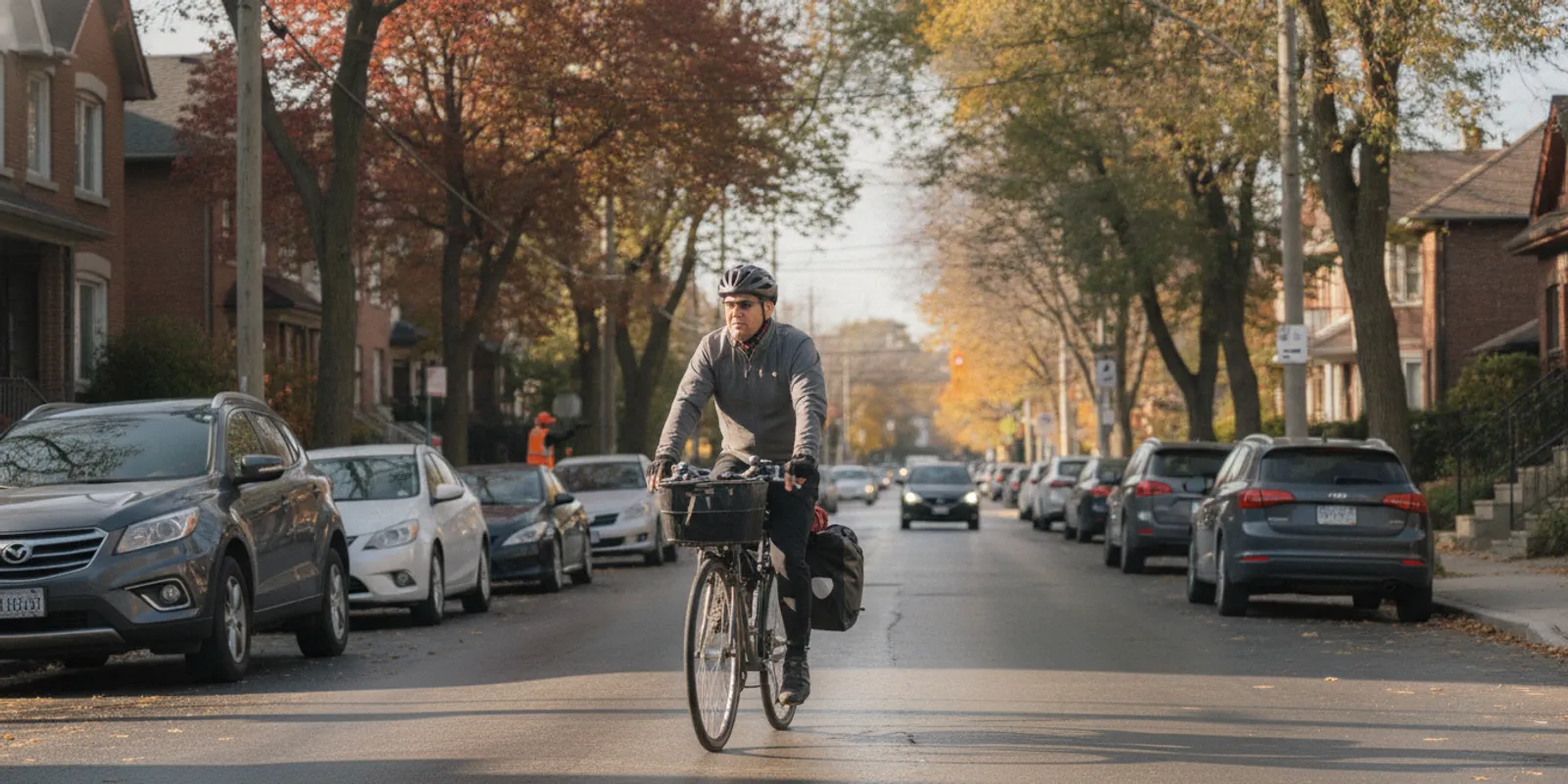

A cycling accident lawyer in Ontario can help an injured cyclist understand which insurance benefits may apply, how fault could be assessed and what evidence may matter. If a collision has left you facing medical appointments, missed work or uncertainty about an insurer’s position, you do not have to sort through every question at once. This guide explains key steps and how a cycling claim may differ from a claim involving two motor vehicles. For a broader overview of injury claims, see this guide to legal rights after a motor vehicle accident.
Call Hoffman Law for a free consultation or case evaluation
Do cyclists have the same legal rights as drivers after an accident in Ontario?
Cyclists injured in collisions may have legal options, even though they were not driving a car and may not have an auto insurance policy of their own. Depending on the circumstances, an injured cyclist may be able to seek statutory accident benefits through an applicable auto insurer and may also have a claim against a person whose negligence contributed to the collision. These are different processes, and one does not automatically replace the other.
A cyclist’s rights depend on the facts: what happened, the injuries, the insurance policies that may respond, and the applicable legal rules. For example, a driver may deny responsibility, an insurer may dispute whether a benefit is payable, or the cyclist may have contributed to the collision in some way. A dispute about fault does not necessarily answer every question about accident benefits.
Ontario’s rules for road users apply to cyclists as well as drivers, but a bicycle is more exposed in a collision with a motor vehicle. Researchers have examined bicycle-motor vehicle crashes and cyclist injury in relation to on-road facilities. That kind of research offers context about crash settings; it does not determine fault or entitlement in an individual Ontario claim. See the academic study on-road bicycle facilities and cyclist injury in bicycle-motor vehicle crashes.
Do not assume that being a cyclist makes you automatically responsible, or that a driver is automatically at fault. A careful review may consider each person’s actions, the road and traffic conditions, visibility, signals, vehicle movements, and available evidence. For practical prevention information, you can also review Hoffman Law’s bicycle safety tips and common causes of cycling accidents.
What accident benefits are available to cyclists injured in car collisions?
When a cyclist is injured in a collision involving a motor vehicle, Ontario’s Statutory Accident Benefits Schedule (SABS) may provide access to no-fault benefits, subject to eligibility, policy terms and the circumstances. “No-fault” means that benefits can be available without first proving that another road user caused the accident. It does not mean every expense is automatically covered or that the insurer cannot ask for information or assess a claim.
Depending on eligibility and the evidence, accident benefits may include:
- Medical and rehabilitation benefits for eligible treatment and recovery-related expenses.
- Income replacement benefits if an injury affects the ability to work and the claimant meets the applicable test.
- Non-earner benefits in certain situations where an injury prevents a person from carrying on a normal life, subject to the legal criteria.
- Attendant care benefits where an impairment creates a qualifying need for assistance with personal care.
- Other benefits or expenses that may be available under the applicable rules and facts.
The insurer and policy that should receive an application can depend on the cyclist’s own insurance, household relationships, the vehicle involved and other circumstances. If you do not have your own auto policy, do not conclude that no coverage exists. Ask an insurer or a lawyer to identify which policy or insurer may be responsible. The application process and timelines matter, so promptly report the collision and ask how to obtain the appropriate forms.
Keep copies of what you send and receive. Record the date you reported the accident, the name of the person you spoke with, and any claim number. If an insurer requests an examination, form or additional medical information, note the deadline and get advice if you are unsure what is being requested. Missing information or a missed deadline can complicate the claim.
Accident benefits are separate from a potential lawsuit against a driver or another party. A civil claim may seek compensation for losses not addressed by benefits, but eligibility and recoverable damages depend on the facts and law. There may also be rules that affect how benefits and damages interact. Read more about how accident benefits work in Ontario and Ontario accident-benefit entitlement.
How are accident benefits different from a claim for damages?
Accident benefits are an insurance process. A tort claim, often called a lawsuit for damages, generally asks whether another party’s conduct caused or contributed to the injury and what losses may be legally recoverable. An injured person may need to consider both tracks. Starting one does not necessarily preserve every deadline or requirement for the other, so ask about time limits early.
Cycling Accident Lawyer Ontario: Help With an Accident-Benefit Dispute
An insurer may ask for more records, question whether a treatment is reasonable and necessary, or take the position that you do not meet a benefit test. A request or denial can feel difficult to manage while you are recovering. Read the letter carefully and note what the insurer decided, the reasons it gave, what information it relied on, and whether it identifies a response or dispute deadline.
Keep the complete letter and envelope or electronic message, along with any forms or reports included. If the decision refers to a medical assessment or record you have not seen, ask how to obtain it. Compare the insurer’s stated reason with the information already provided, and make a dated list of any missing records or questions. You can ask the insurer to explain what it needs, but keep a copy of your request and the response. Avoid assuming that a phone conversation changes the written decision or extends a deadline.
Consider getting advice before you respond if the dispute involves ongoing treatment, income support, attendant care or a serious injury. A lawyer can help identify the issue in dispute, what evidence may address it and which procedural route may apply. In Ontario, certain accident-benefit disputes may be brought to the Licence Appeal Tribunal’s Automobile Accident Benefits Service (LAT-AABS). Whether that route is available and what time limits apply depend on the decision and circumstances. Do not treat this as a complete procedural guide; get advice promptly about the specific decision and any deadline.
A denied or reduced benefit does not automatically mean you have no options, but no particular result can be guaranteed. Continue following appropriate medical advice, preserve updated treatment records, and keep communicating in a clear and timely way. If you are unsure whether the letter is a final decision, ask the insurer to clarify in writing and seek independent legal guidance. Keep in mind that an accident-benefit dispute and a possible claim against a driver are separate questions that may require separate steps.
How is liability determined in automobile-bicycle accident cases?
Liability is assessed from evidence about how the collision happened. The fact that a cyclist was hurt does not by itself prove negligence. The driver’s conduct, the cyclist’s actions and the surrounding conditions may all be relevant. In some cases, more than one party may have contributed to the collision, and responsibility may be divided. An insurer’s initial view is not necessarily the final word.
Questions that may arise include whether a driver checked for cyclists before turning or opening a door, whether a cyclist had a reasonable opportunity to react, what traffic signals showed, and whether parked vehicles, construction or poor visibility affected what each person could see. The precise issues vary by case. A lawyer will consider the full setting rather than rely on one isolated detail. Academic research has also examined cognitive drivers of unsafe cycling behavior; that research concerns general behavior, not the cause of a particular collision or legal responsibility in Ontario. See Cognitive Drivers of Unsafe Cycling Behavior.
Potential evidence may include vehicle or bicycle damage, photographs, witness accounts, a police report, nearby camera footage, and the parties’ statements. Road layout, sightlines, weather and lighting may also matter. Physical evidence can change quickly: a bicycle may be repaired, a vehicle may be moved, and surveillance footage may be erased under routine retention practices. Preserve what you can safely and lawfully access, but do not put yourself at risk to collect it.
Fault can also affect a damages claim. If a cyclist is found partly responsible, that may affect the amount recoverable from another party. Whether any reduction applies and how it is calculated depends on the evidence and applicable law. Do not let an early assumption about fault stop you from documenting the event or getting advice, particularly if you have serious injuries.
Medical evidence is important too. Seek appropriate care and explain all symptoms, including pain, dizziness, headaches, memory problems, sleep changes or emotional effects. Some problems may not be obvious at the scene or may develop over time. Follow medical advice and keep a record of appointments, restrictions and how your symptoms affect daily life. For information about a particular type of injury, see Hoffman Law’s Ontario brain injury compensation guide.
What evidence is critical in a cycling accident injury claim?
There is no single document that proves every claim. A clear, consistent record can help an insurer or lawyer understand the collision, the injuries and the effects on your life. When possible, organize material by date and keep the originals. Do not edit photos or discard damaged equipment before considering whether it should be documented.
| Evidence or record | What it may help show | Practical step |
|---|---|---|
| Scene photographs or video | Road layout, signs, signals, lighting, weather, vehicle positions and visible damage | If safe, take wide and close views. Note the date, time and location. |
| Witness names and contact details | Independent observations of the collision or events immediately after it | Ask for contact information; do not pressure anyone to adopt your account. |
| Police or collision records | Reported details, involved parties and any investigation information | Keep the occurrence number and find out how to request available records. |
| Medical records and treatment notes | Injuries, symptoms, treatment, restrictions and recovery over time | Attend follow-up care and keep appointment and expense records. |
| Bicycle, helmet and clothing | Possible impact or damage details that may help explain the collision | Photograph them and ask before repairing, replacing or disposing of them. |
| Work and expense records | Missed work, reduced duties, out-of-pocket costs and practical effects | Save pay information, receipts, invoices and employer correspondence. |
| Messages and insurance letters | What was reported, requested, accepted or disputed and when | Keep copies and note calls, claim numbers and response dates. |
Write down your own recollection as soon as you are able. Include the route, direction of travel, approximate time, what you saw and heard, the sequence of events and anything that may have affected visibility or braking. Separate what you remember from what someone later told you. If a detail is uncertain, say so rather than guessing.
Ask nearby businesses, residences or transit services whether relevant footage exists, but remember that access may be restricted and recordings may not be kept for long. An insurer or lawyer may be able to advise on a proper request. Do not post detailed commentary about the collision or your injuries on social media without considering how it could be interpreted. Keep communications factual and avoid speculation about blame.
Injuries can affect more than medical appointments. Track help you need at home, changes to caregiving or household tasks, transportation costs and activities you have had to stop or modify. This is not a reason to exaggerate or keep a burdensome diary. A simple, dated note can help you remember changes when you later discuss your situation with a health professional or lawyer.
What should you do after a cycling collision in Ontario?
- Get to a safe place and seek urgent medical help. Call emergency services if needed. Do not delay care to gather evidence.
- Report the collision as appropriate. Follow police reporting requirements and exchange information with involved parties when it is safe to do so.
- Record the basics. Note the date, time, location, involved vehicles, witnesses and any occurrence or claim numbers.
- Notify the relevant insurer promptly. Ask how to start an accident-benefit application and keep copies of forms and correspondence.
- Preserve evidence. Photograph damage and the scene if safe. Keep the bicycle, helmet, clothing, receipts and relevant messages.
- Follow medical advice and document changes. Tell your provider about symptoms and how your daily activities or work are affected.
- Get advice about deadlines and options. Benefit applications and civil claims can have different notice and limitation rules. Do not assume that communicating with an insurer pauses a legal deadline.
If the collision involved a car, this related checklist on what to do after a car accident may also help with practical next steps. Cycling collisions have details that may not fit every general car-accident checklist, so focus on your health and seek advice specific to your circumstances.
Cycling Accident Lawyer Ontario: What to Bring to a Free Consultation
You do not need to have every record assembled before asking for help. A first discussion can start with what you remember and the main questions troubling you. If you have them, bring or organize:
- A short timeline of the collision and what has happened since.
- Names and contact details for drivers, witnesses and insurers, plus any police occurrence number.
- Photographs, video, bicycle or vehicle damage information, and details of any possible cameras.
- Medical provider names, appointment dates, treatment plans and any work restrictions.
- Insurance information, claim numbers, application forms and letters or emails from insurers.
- Records of missed work, reduced income, expenses and support you need at home.
- A list of questions, including which insurer to contact, what forms are needed and what deadlines may apply.
A lawyer can review the available information, explain possible routes and identify what additional evidence may be useful. No one can promise a particular result before assessing the facts, the injuries, the available coverage and the applicable law. Hoffman Law is a Toronto-based personal injury and disability firm serving clients throughout Ontario. The firm offers free consultations and case evaluations and uses a contingency-fee approach; ask about the terms that would apply to your matter.
Speak with Hoffman Law about your cycling accident claim
Frequently asked questions
Can I claim accident benefits if I do not own a car?
Possibly. Not owning a car does not automatically mean there is no applicable coverage. The relevant insurer may depend on your household, any policies available to you and the vehicle involved. Ask promptly which insurer should receive your application.
Can I make a claim if the driver says the collision was my fault?
An allegation is not a final decision about liability. Evidence about the collision must be reviewed, and more than one person may have contributed. Preserve records and get legal advice before treating an early statement as conclusive.
What if my injuries appeared days after the collision?
Seek medical care and explain when the symptoms began and how they have changed. Keep a record of treatment and tell the insurer about the injury as soon as reasonably possible. Delayed symptoms do not by themselves answer whether a claim is valid; the facts and evidence matter.
How long do I have to start a cycling accident claim?
Different accident-benefit and civil claim steps can have different notice and limitation requirements. The applicable deadline may depend on the claim and circumstances. Get advice as early as you can rather than relying on a general timeline or assuming an insurer conversation preserves your rights.
A serious cycling collision can leave you managing recovery while trying to understand insurance, evidence and deadlines. Getting clear advice early can help you identify practical next steps and make informed decisions about your options.