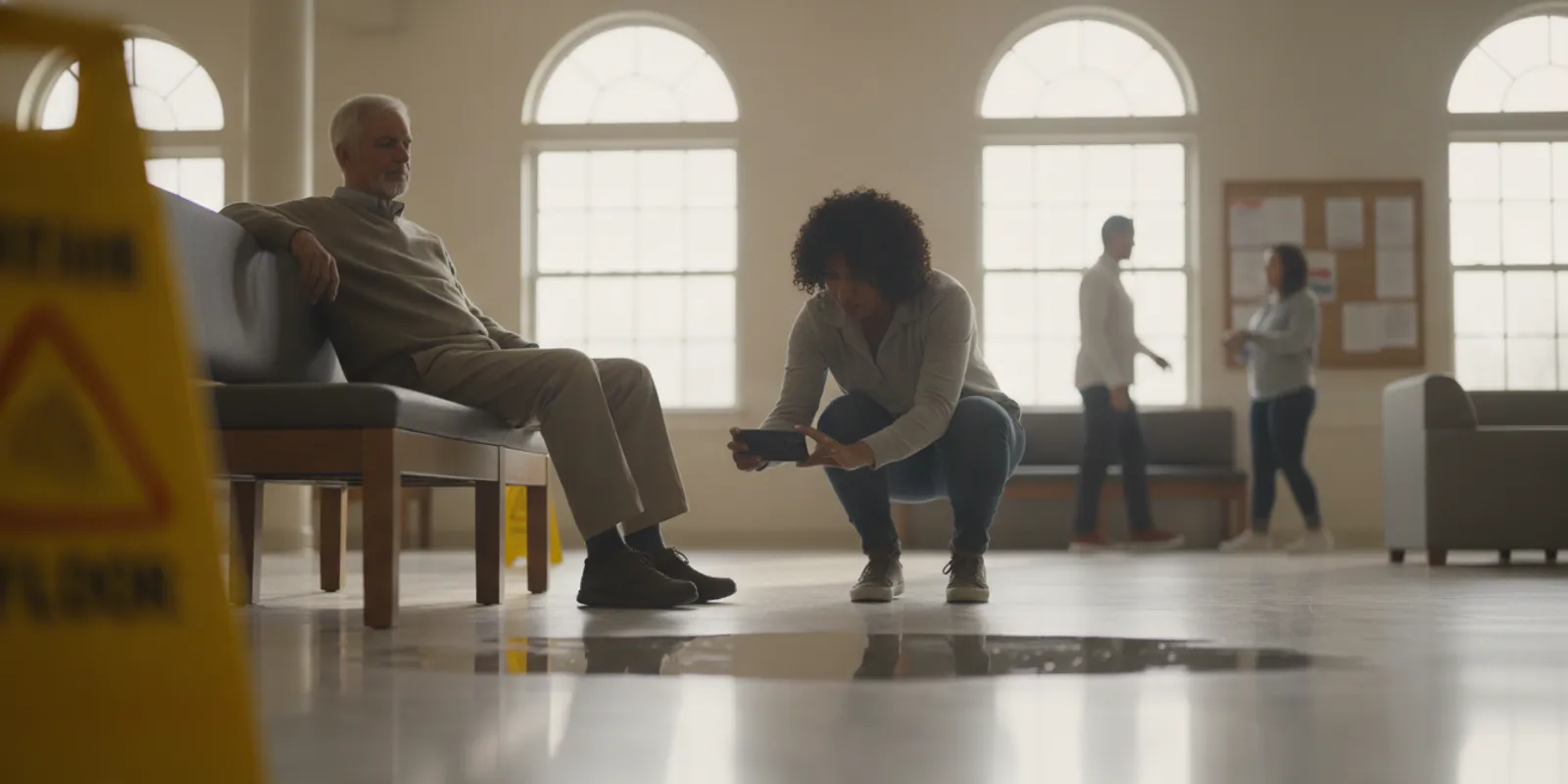

A slip and fall can leave you dealing with pain, appointments, time away from work, and questions about who is responsible. If you are considering a slip and fall claim in Ontario, the central issue is usually whether the person or organization responsible for the property failed to take reasonable care and whether that failure caused your injury. Each case turns on its own facts. This article explains the legal framework and practical steps that may help preserve your options. For a wider look at accident-related legal rights, see our related guide to legal rights after a motor vehicle accident.
Contact Hoffman Law for a free consultation or case evaluation.
What is premises liability and when does it apply to slip and fall cases?
Premises liability concerns injuries connected to the condition of a property or the way it is used or maintained. In Ontario, the Occupiers’ Liability Act is an important part of the framework. An “occupier” may be a property owner, tenant, business, organization, or another party with responsibility or control over the premises. More than one party may have a role.
A fall by itself does not prove that an occupier was legally at fault. The question is whether the responsible occupier took reasonable care in the circumstances to keep people reasonably safe. The risk, the location, the occupier’s knowledge, the steps taken to inspect or address the hazard, and the time available to respond may all matter. The duty is not a promise that no accident will happen. For related context on how rights after an accident may depend on the type of incident, see our guide to legal rights after a motor vehicle accident.
Potential hazards include an unmarked spill, a damaged floor, loose carpeting, an obstruction in a walkway, poor lighting, an icy entrance, or snow that was not cleared within a reasonable time. The relevant facts differ. A spill in a busy grocery aisle may need a different response from a short-lived hazard in a rarely used area. A winter fall may involve questions about weather, salting, inspection, and maintenance practices.
Responsibility may also depend on where the fall happened. A store, apartment building, private home, workplace, and municipal sidewalk can involve different occupiers and notice considerations. If your injury happened on public or privately managed property, identify the exact place as soon as you can. Our article on the Occupiers’ Liability Act and slip and fall injuries offers additional background.
What do you need to prove for a slip and fall claim in Ontario?
A claim generally needs evidence that connects the occupier’s conduct to the injury. The precise legal test and evidence depend on the circumstances, but four practical questions often help organize the facts:
- Who had responsibility for the area? Identify the owner, tenant, business, property manager, municipality, or other party that controlled or maintained the location. Responsibility can be shared, so do not assume that the name on a sign or building is the only relevant party.
- What was the hazard? Describe the condition as specifically as possible. For example, distinguish a puddle from tracked-in moisture, or a broken stair edge from a general lack of lighting. Note where it was, how large it appeared, and whether there were warnings or barriers.
- What did the occupier know or what should reasonable care have led it to do? Evidence may show that staff created the hazard, received a report, saw it during an inspection, or had enough time and reason to discover and address it. Cleaning logs, incident reports, maintenance records, and witness accounts can be relevant. The absence of one document does not automatically decide a case.
- Did the hazard cause a real injury and loss? Medical records, your account of symptoms, treatment recommendations, work records, receipts, and evidence about daily limitations can help show what happened after the fall. It is important to be honest and consistent about symptoms and prior health conditions.
These questions work together. A hazard may have existed, but the claim still needs evidence about the occupier’s conduct and the connection to your injury. On the other hand, a fall can happen without the injured person seeing a hazard beforehand; not knowing exactly how long it was there does not by itself answer whether the occupier took reasonable care. A legal assessment looks at the full record rather than one detail in isolation.
Fault may also be disputed. An occupier may argue that it used reasonable inspection and maintenance practices, that it did not have a reasonable opportunity to respond, or that something else caused the fall. The injured person’s own actions may also be considered. If more than one party contributed, responsibility and compensation may be affected. Do not conclude that you have no claim solely because you were distracted, did not report the fall immediately, or cannot remember every detail while injured.
What does Ontario’s Occupiers’ Liability Act require?
The Occupiers’ Liability Act sets out a duty for an occupier to take reasonable care in the circumstances to see that people entering the premises, and property they bring with them, are reasonably safe while on the premises. What is reasonable depends on the situation. The law does not require every possible precaution, and it does not make an occupier automatically responsible whenever someone is hurt.
In practice, the condition of the property and the occupier’s response are important. A court may consider whether there was a reasonable inspection system, whether staff followed it, how soon a hazard was reported or discovered, whether it could be cleaned or repaired, and whether a warning or barrier was used while the issue remained. For an outdoor winter hazard, weather and the timing and quality of clearing or treatment may matter. There is no single inspection interval or maintenance step that decides every case.
Some properties have more than one occupier. A landlord, commercial tenant, maintenance contractor, or other party may have had control over different areas or tasks. Contracts and day-to-day practices can help clarify who was responsible. A person who is injured does not need to settle every responsibility question before seeking advice; preserving the details can help identify the relevant parties.
The Government of Ontario provides official information about provincial laws and services through its Ontario government website. Because the application of the Act and related rules depends on the facts, a general article is not a substitute for advice on a particular incident.
What should you do immediately after a slip and fall?
Your health comes first. Get medical help for urgent symptoms and follow the advice of a health professional. If you are able, or someone can help, take practical steps to preserve information. You do not need to investigate the whole case at the scene.
- Record the location and time. Write down the address, the exact area where you fell, the date, approximate time, and what you remember about the events before and after. Note weather conditions if the fall happened outside.
- Photograph the scene if it is safe. Take wide shots that show the location as well as closer images of the hazard, footwear marks, lighting, warnings, or barriers. Do not put yourself at risk to get a photograph. If the condition is cleaned or repaired, your own images may be the only record of how it looked.
- Get witness details. Ask anyone who saw the fall or noticed the hazard for their name and contact information. A witness may be able to describe how long the condition was present or what happened immediately afterward. Avoid coaching anyone or asking them to guess.
- Report the incident and keep a record. Tell the property representative what happened when practical. Ask how to obtain a copy of any incident report, but keep your own dated notes too. Reporting an incident is not the same as agreeing with someone else’s account of fault.
- Keep relevant items and documents. Save the shoes and clothing you wore, photographs, messages, receipts, and correspondence. Do not alter or discard items that may help explain the fall.
- Follow up on your health. Seek appropriate medical assessment, describe your symptoms accurately, and keep copies of appointment details and treatment instructions. Symptoms can change over time, so record new or worsening problems and tell your provider.
- Track the practical effects. Keep a simple record of missed work, help you need at home, travel to appointments, and expenses related to the injury. Save receipts and relevant employment or benefit documents.
For more ideas on preserving useful details, read Hoffman Law’s guide to why early details matter in Ontario slip and fall claims. If you are also dealing with an insurance company after a separate vehicle accident, our overview of what to do after a car accident addresses that distinct process.
What deadlines apply to an Ontario slip and fall claim?
Do not wait to ask about time limits. A general limitation period may apply to a civil claim, and special notice rules can apply to falls involving snow or ice and certain public or private property. The relevant deadline can depend on the type of property, the nature of the hazard, who may be responsible, and the circumstances of the injury. Missing a required notice deadline can put a claim at risk, even when the person is still within a general limitation period.
Ontario has special written-notice provisions commonly associated with snow or ice claims: notice may be required within 10 days for certain claims involving municipal property and within 60 days for certain claims involving private property. These rules have conditions and exceptions, and the deadlines may not apply in the same way to every fall. There can also be other issues affecting time limits. This is not a complete statement of the law, so get legal advice promptly rather than relying on a general summary or assuming that a report to a property manager counts as formal notice.
If you are unsure whether a deadline has passed, seek advice as soon as possible. Keep copies of any notice or correspondence and proof of when and how it was delivered. You can also review Hoffman Law’s information about making a claim after a slip and fall while gathering your incident details.
How is compensation calculated for a slip and fall injury?
There is no standard amount for every fall. The value and eligibility of a claim depend on evidence, the injury, its effects, applicable legal rules, and the extent to which another party is found responsible. Compensation, if available, may address several kinds of loss. A claim should be based on documented impact, not a promised figure.
| Type of loss | Examples of supporting information | What may affect assessment |
|---|---|---|
| Pain, suffering, and loss of enjoyment of life | Medical records, treatment history, symptom notes, and evidence about affected activities | Nature and duration of symptoms, recovery, and effect on everyday life |
| Income loss and work impact | Pay records, employer information, time missed, and evidence of work restrictions | Past loss, future capacity, ability to return to work, and supporting medical evidence |
| Health care and rehabilitation expenses | Invoices, receipts, treatment plans, and records of benefits paid or available | Whether the expense is connected to the injury, reasonable, and supported |
| Out-of-pocket and care-related costs | Receipts and records of paid assistance or additional expenses related to the injury | Proof of the expense, the need for assistance, and the applicable legal rules |
The table is a general guide, not a guarantee that each category applies. An insurer or defendant may question whether a loss was caused by the fall, whether the treatment was necessary, or whether the amount is supported. Prior conditions do not automatically prevent a claim, but they can make careful medical documentation important. The full picture may include both the injury itself and how it affects work, mobility, family responsibilities, and independence.
Be cautious about signing a release or accepting a final settlement before you understand what it covers. A settlement may resolve claims beyond the expense or symptom currently being discussed. If you are asked to provide records or a statement, consider getting advice about the request and its implications. Hoffman Law’s guide on when to speak with a personal injury lawyer covers a different accident setting but provides general points to consider when legal questions arise; the right timing depends on your circumstances.
Frequently Asked Questions
Does a fall automatically mean the property owner is liable?
No. An injury alone does not establish liability. The key questions include who occupied or controlled the area, what hazard existed, whether reasonable care was taken, and whether the hazard caused the injury. The facts and available evidence matter.
What if there were no witnesses?
You may still have useful evidence. Photographs, incident reports, prompt medical records, your own notes, maintenance documents, and accounts from people who saw the hazard before or after the fall may help. Preserve what you can and seek advice about obtaining records that are held by someone else.
Can I bring a claim if I may have contributed to the fall?
Possibly. The effect of a person’s own conduct depends on the evidence and the applicable law. Do not assume that a possible contribution automatically prevents a claim. A lawyer can assess how the facts may affect responsibility and compensation.
How long will a slip and fall claim take?
There is no fixed timeline. It can depend on the injury and recovery, the time needed to gather records, whether fault is disputed, and whether the matter resolves through negotiation or proceeds further. Some losses are difficult to assess until there is a clearer picture of recovery and future needs.
Discuss your Ontario slip and fall concerns
If you were injured on someone else’s property, you may be trying to manage treatment and daily responsibilities while also wondering what to do next. Hoffman Law is a Toronto-based personal injury and disability firm serving clients throughout Ontario, including North York. The firm offers free consultations and case evaluations on a contingency-fee basis; fees and expenses should be discussed so you understand the terms for your matter. Eligibility and outcomes depend on the facts and applicable law.
Contact Hoffman Law for a free consultation or case evaluation.
Keep any photographs, witness details, medical information, and incident correspondence in one place, and get legal guidance promptly if a deadline may apply.